
Shih Tzu Pros and Cons: Is This Breed Right for You? (Adopting vs. Buying)
Disclosure: This article contains affiliate links. As an Amazon Associate, Shih Tzu Pedia earns from qualifying purchases, at no extra cost to you.
How we researched this article: This guide is based on the official AKC breed standard, the American Kennel Club, the American Shih Tzu Club, a 2024 Royal Veterinary College study of more than 11,000 Shih Tzus, peer-reviewed allergy research, and the ASPCA. Every source is listed at the end. Last reviewed: September 2026.
Shih Tzus are small, affectionate, and bred to be companions. They are also a high-maintenance breed in some ways. This guide gives you an honest look at the pros and cons, and explains how to choose between adopting and buying from a breeder.
It replaces our earlier separate articles on Shih Tzu pros and cons and on Shih Tzu adoption.
Shih Tzu Pros and Cons at a Glance
| Pros | Cons |
|---|---|
| Bred as a companion. The AKC standard calls for an outgoing, happy, affectionate, friendly, and trusting temperament. | The long coat needs regular brushing and professional trims or a lot of home grooming. |
| Small size: 9 to 16 pounds under the AKC standard. Suits apartments and smaller homes. | Flat face: breathing problems and heat sensitivity. |
| Moderate exercise needs. | Several common health issues, including dental, ear, eye, skin, and anal gland problems. |
| Long life: median age at death of 12.7 years in a large UK study. | Not truly hypoallergenic, despite common claims. |
| Usually friendly with people and other pets when well socialized. | Many do not like being left alone for long periods. |
The Pros of Owning a Shih Tzu
1. A true companion dog
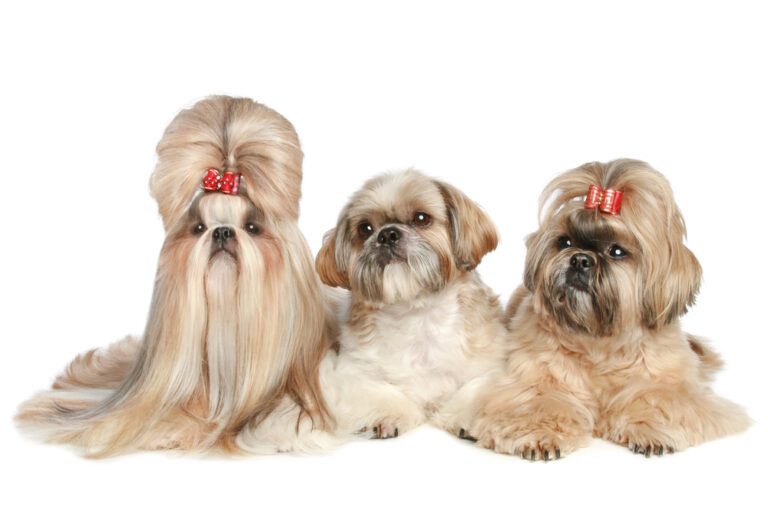
Shih Tzus were bred for centuries as palace companions, not working dogs. The AKC breed standard says the Shih Tzu should be “outgoing, happy, affectionate, friendly and trusting towards all.” Read more in our guide to Shih Tzu personality and the breed’s history.
2. A good size for many homes
Adults stand 9 to 10½ inches tall and ideally weigh 9 to 16 pounds, according to the AKC standard. That makes them easy to carry, travel with, and house in an apartment.
3. Moderate exercise needs
Short daily walks and indoor play meet most Shih Tzus’ needs. Because of their flat faces, they should not be pushed hard, especially in warm weather. See our Shih Tzu exercise guide.
4. A long life
A 2024 Royal Veterinary College study of more than 11,000 Shih Tzus found a median age at death of 12.7 years, and some dogs lived much longer. See our Shih Tzu lifespan guide.
5. Friendly with others when socialized
Many Shih Tzus live happily with children, other dogs, and cats. Young children should always be supervised, because a small dog can be hurt by rough handling or a fall. See our guide to Shih Tzus and cats.

The Cons of Owning a Shih Tzu
1. Grooming takes real time
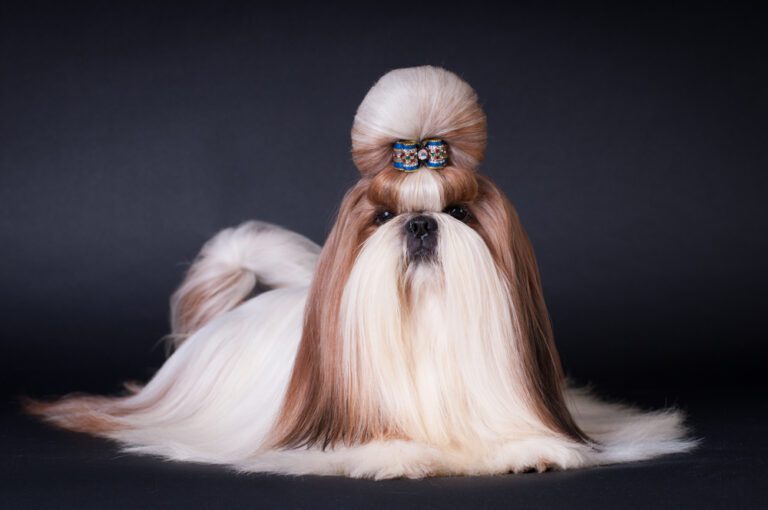
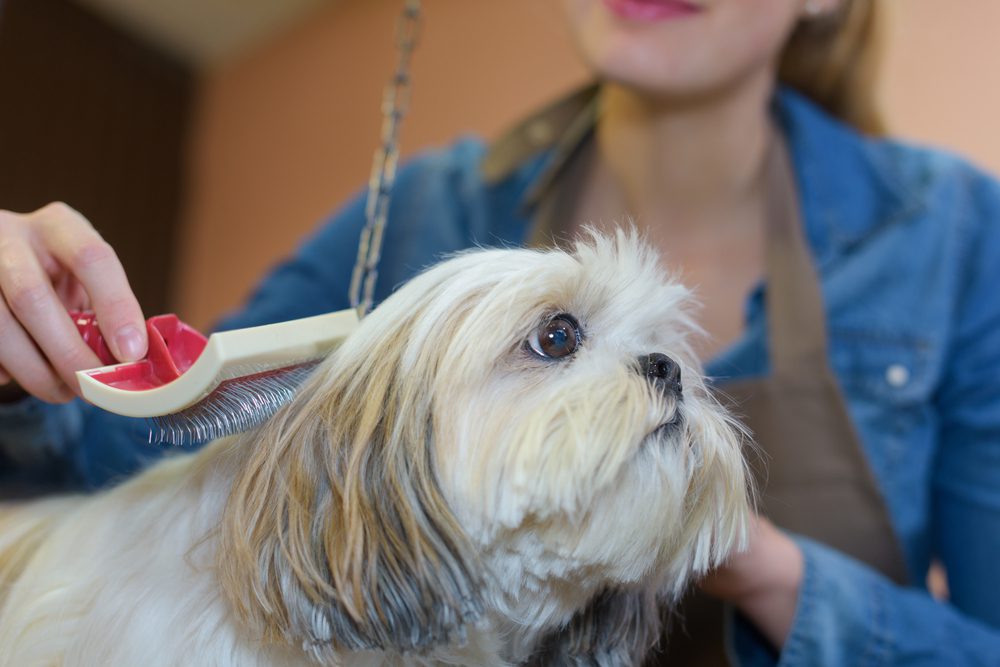
The American Kennel Club advises daily brushing for a long coat, with baths about every three to four weeks. Owners who keep a short puppy cut still need a professional trim about every four to six weeks. See our Shih Tzu grooming guide.
2. Flat-face health issues
Shih Tzus are brachycephalic, meaning they have short muzzles. This can cause noisy breathing, snoring, and trouble in hot weather. See Shih Tzu breathing problems and Shih Tzus in hot and cold weather.
3. Common health problems
The 2024 Royal Veterinary College study found that the most common problems in Shih Tzus included periodontal (gum) disease in 9.5 percent, anal sac impaction in 7.4 percent, and ear disorders in 5.5 percent. At a broader level, skin, dental, eye, and digestive disorders were all common. Regular vet care and good home care help.
4. Not truly hypoallergenic
Shih Tzus are often sold as “hypoallergenic” because they shed less visibly than many breeds. Research does not support this label for any breed. A 2011 study of 173 homes found no significant difference in the main dog allergen (Can f 1) between homes with so-called hypoallergenic breeds and homes with other breeds. A 2012 study reached a similar conclusion. People with dog allergies should spend time with a Shih Tzu before committing. See our Shih Tzu shedding guide.

5. They do not like being alone for long
Because they were bred for companionship, many Shih Tzus become stressed when left alone for long hours. See our guide to Shih Tzu anxiety.
Adopting a Shih Tzu vs. Buying From a Breeder
Adopting from a shelter or rescue
- You give a dog a second chance. Shih Tzus and Shih Tzu mixes regularly need new homes.
- Adult dogs have known personalities. Rescues can often tell you how a dog behaves with children, cats, and other dogs.
- Fees often include vet care. Many shelters and rescues include spaying or neutering, first vaccines, and a microchip. Ask exactly what is included.
- Where to look: the American Shih Tzu Club has a rescue committee with regional contacts. Local humane societies, SPCAs, and breed rescues are also good places to start.
Things to consider: a rescued dog may have an unknown history, health needs, or fears that take patience and training. Good rescues are honest about this and offer support after adoption.
Buying from a responsible breeder
- Health testing. The American Shih Tzu Club’s breeder guidelines recommend eye exams, hip X-rays after 2 years of age, kidney screening, and other tests. Ask to see results for both parents.
- Meet the parents. Visit the breeder, see where the puppies are raised, and meet at least the mother.
- A written contract. Responsible breeders use contracts, often with spay and neuter terms for pet puppies, and will take the dog back if needed.
- Referrals. The American Shih Tzu Club offers a breeder referral service.
Avoid puppy mills. The ASPCA warns that commercial puppy mills keep dogs in poor conditions to produce puppies for sale. Be cautious of sellers who will not let you visit, always have puppies available, sell through pet stores, or offer to ship a puppy you have never met. Also be cautious of “Imperial” or “teacup” labels. See the truth about Imperial Shih Tzus.
Not sure whether a dog is purebred? See how to identify a purebred Shih Tzu. Considering a mix? See our Shih Tzu mixes guide.
Is a Shih Tzu Right for You?
A Shih Tzu may be a great fit if you:
- want an affectionate indoor companion
- are home often, or can arrange company for your dog
- are ready to brush daily or pay for regular grooming
- can budget for routine vet and dental care
- live in an apartment or a home without a big yard
Another breed may suit you better if you want a running or hiking partner in hot weather, need a truly low-allergen dog, or have little time for grooming.
Bringing Your Shih Tzu Home: Starter Essentials
- MidWest iCrate, 24-inch. A folding wire crate sized for small breeds from 12 to 20 pounds, with a divider panel for puppies. Check price on Amazon →
- Voyager Step-in Air Dog Vest Harness. A lightweight mesh harness. Many vets suggest a harness instead of a neck collar for flat-faced dogs. Check price on Amazon →
- Nature’s Miracle Enzymatic Stain and Odor Remover. Enzyme cleaners help remove the odor that can draw a dog back to the same spot during house training. Check price on Amazon →
- Chris Christensen 27 mm Oval Pin Brush. For daily brushing of a long coat. Check price on Amazon →
Next steps: our Shih Tzu puppy care guide and potty training guide.
Frequently Asked Questions
Are Shih Tzus good for first-time owners?
Often, yes. They are small, friendly, and have moderate exercise needs. First-time owners should be ready for daily grooming and regular vet and dental care.
Are Shih Tzus hypoallergenic?
No dog breed is truly hypoallergenic. Studies have found similar levels of the main dog allergen in homes with so-called hypoallergenic breeds and other breeds. Spend time with a Shih Tzu before deciding if you have allergies.
Should I adopt or buy a Shih Tzu?
Both can work. Adoption gives a dog a new home and often includes basic vet care. If you buy, choose a breeder who health tests, lets you visit, and uses a written contract.
Are Shih Tzus good with kids?
Many are, when well socialized. Always supervise young children, because a small dog can be hurt by rough play or a fall.
Do Shih Tzus need a lot of grooming?
Yes. A long coat needs daily brushing, and most Shih Tzus need a bath every three to four weeks. A short puppy cut needs a professional trim about every four to six weeks.
Sources
- American Kennel Club. Official Standard of the Shih Tzu.
- American Kennel Club. The Glamorous Shih Tzu Coat, From Top Knot to Tail. 2026.
- Dale F, Brodbelt DC, West G, Church DB, Lee YH, O’Neill DG. Demography, common disorders and mortality of Shih Tzu dogs under primary veterinary care in the UK. Canine Medicine and Genetics, 2024;11:2.
- Nicholas CE, Wegienka GR, Havstad SL, et al. Dog allergen levels in homes with hypoallergenic compared with nonhypoallergenic dogs. American Journal of Rhinology & Allergy, 2011. Summary via Animal Health Foundation.
- Vredegoor DW, Willemse T, Chapman MD, Heederik DJJ, Krop EJM. Can f 1 levels in hair and homes of different dog breeds: lack of evidence to describe any dog breed as hypoallergenic. Journal of Allergy and Clinical Immunology, 2012.
- American Shih Tzu Club. ASTC Rescue Committee and Breeder Guidelines.
- ASPCA. Puppy Mills.
This article is for general information. It is not a substitute for advice from your veterinarian. Read our medical disclaimer.