How to Potty Train a Shih Tzu: A Step-by-Step Guide (2026)
Disclosure: This article contains affiliate links. As an Amazon Associate, Shih Tzu Pedia earns from qualifying purchases on Amazon.com and Amazon.ca, at no extra cost to you.
How we researched this guide: This article is based on housetraining and crate training guidance from the American Shih Tzu Club (ASTC) and the American Kennel Club (AKC). Last reviewed: September 2026.
Quick answer: Take your Shih Tzu puppy outside on a schedule: after waking, after meals and drinks, after play, and before bed. Reward them the moment they finish. Supervise or crate them the rest of the time, and clean accidents with an enzyme cleaner. The American Shih Tzu Club notes that reaching full reliability can take several weeks or even months.
Are Shih Tzus Hard to Potty Train?
Shih Tzus have a reputation for being slow to housetrain. The American Shih Tzu Club puts it more simply: some dogs learn quickly and others take a bit longer. Success depends mostly on the owner’s consistency and positive reinforcement, not on the dog being stubborn.
Small dogs also have small bladders, so puppies need more frequent trips outside. Plan for several weeks to several months of steady effort.
When to Start and How Long a Puppy Can Wait
Start the day your puppy comes home. The AKC notes that puppies can generally hold their bladder for about the same number of hours as their age in months. The ASTC gives a similar rule, with a maximum of about 8 hours for adult dogs.
| Puppy age | About how long they can wait (awake, during the day) |
|---|---|
| 2 months | About 2 hours |
| 3 months | About 3 hours |
| 4 months | About 4 hours |
| 6 months | About 6 hours |
These are rough limits, not goals. Take your puppy out more often than the limit to prevent accidents.
What You Will Need
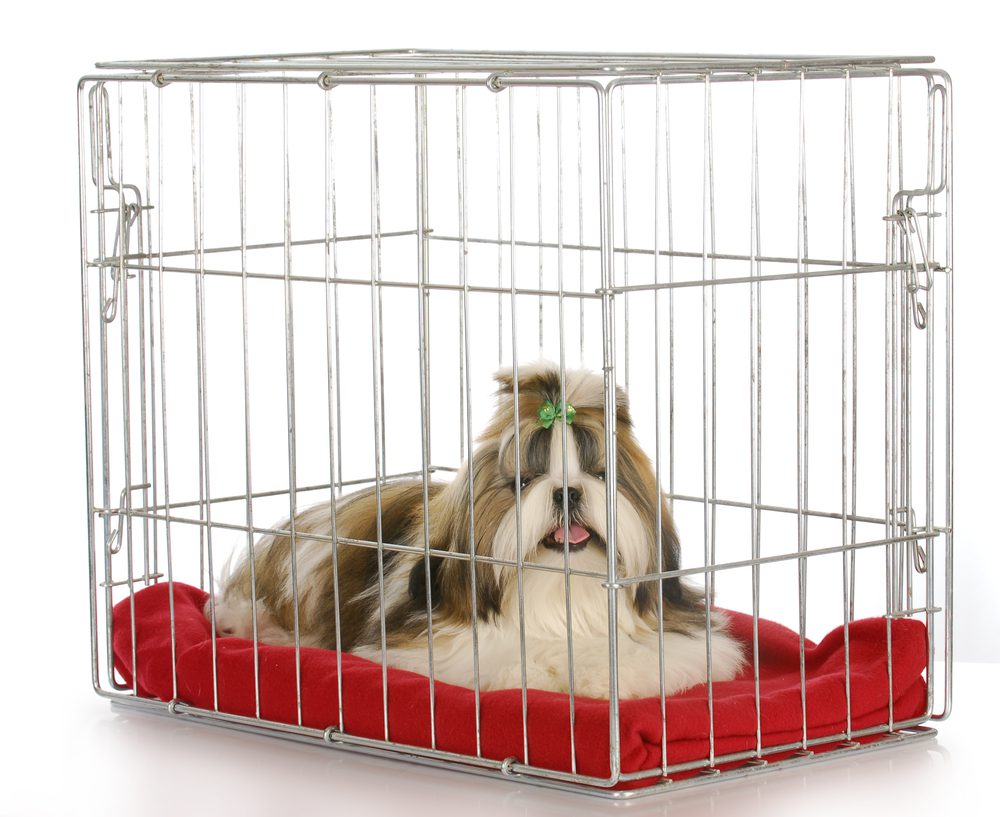
- A crate sized so your puppy can stand, turn around, and lie down, but not so large that they can potty in one corner and sleep in another. The AKC recommends this size rule. A 24-inch crate with a divider, such as the MidWest iCrate 24-inch, lets you make the space smaller while your puppy is young.
- A leash and harness for potty trips.
- Small, soft training treats such as Zuke’s Mini Naturals or Pupford freeze-dried treats.
- An enzyme cleaner such as Nature’s Miracle. The AKC recommends cleaning accidents thoroughly with an odor-neutralizing product.
- A baby gate such as the Carlson extra-wide walk-through gate to limit your puppy to a safe area.
Step-by-Step Potty Training Method
- Pick a potty spot. Use the same spot each time. The smell helps your puppy understand what to do there.
- Go out on a schedule. The AKC lists these key times: first thing in the morning, last thing at night, after naps, after crate time, after meals, after drinking, after chewing, and after play.
- Use a cue word. Say a short phrase, such as “go potty,” as your puppy starts to go.
- Reward right away. The AKC advises praising your puppy and giving a small treat immediately after they finish, while you are still outside.
- If nothing happens, try again soon. Bring your puppy back in, keep them in the crate or close to you for a few minutes, then try again.
- Supervise or confine. When you cannot watch your puppy, use the crate or a gated area. Most accidents happen when a puppy has too much freedom too soon.
A Sample Daily Schedule for a Young Puppy
| Time | Activity |
|---|---|
| Wake up | Straight outside to the potty spot |
| Breakfast | Potty break afterward |
| Every 1 to 2 hours while awake | Potty break, plus after every nap and play session |
| Lunch and dinner | Potty break afterward |
| Before bed | Last potty trip of the day |
| Overnight | Young puppies may need one trip outside at night |
Adjust the schedule as your puppy grows and can wait longer.
Crate Training Tips
- The ASTC notes that dogs generally will not soil where they sleep, which is why crates work.
- Do not leave a young puppy in the crate for more than a few hours at a time, as the ASTC advises.
- Place the crate in a quiet, low-traffic area. Soft background noise can help your puppy settle.
- Feed meals in the crate to build a positive association.
- Never use the crate as punishment.
Read our full Shih Tzu crate training guide for more detail.
Indoor Potty Options
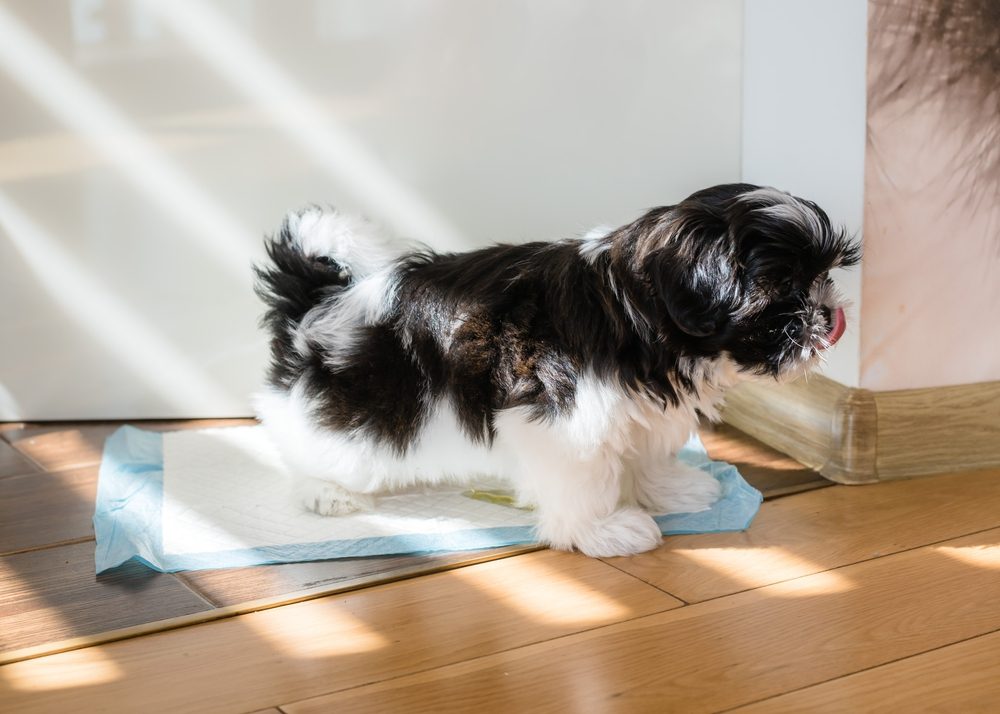
The ASTC notes that paper or litter pan training can work well for small dogs and for people living in high-rise buildings. Start with a larger papered area and shrink it as your dog learns. If you plan to switch to outdoor training later, move the pad closer to the door over time, then outside.
How to Handle Accidents
- Do not punish. The ASTC explains that dogs do not connect a scolding with an accident that already happened. Punishment only makes them fear you.
- Interrupt calmly if you catch your puppy in the act, and take them outside right away.
- Clean with an enzyme cleaner. Leftover odor draws puppies back to the same spot.
- Look for the pattern. Most accidents mean the puppy needed more supervision or more frequent trips.
When to call the vet: If your puppy has accidents often despite a good routine, pees very small amounts frequently, strains, has blood in the urine, or starts having accidents after being fully trained, see your vet. These can be signs of a urinary problem. Read our Shih Tzu urinary problems guide.
How Long Does It Take?
The AKC notes that some puppies develop reliable habits within days, while others need several months. The ASTC suggests allowing several weeks or even months for full reliability. Stay consistent, and celebrate progress.
Frequently Asked Questions
How long does it take to potty train a Shih Tzu?
It varies. The AKC notes that some puppies learn in days while others take several months, and the American Shih Tzu Club suggests allowing several weeks or even months for full reliability.
How often should I take my Shih Tzu puppy outside?
Take your puppy out after waking, after meals and drinks, after play, after naps and crate time, and before bed. Young puppies may need to go every 1 to 2 hours while awake.
How long can a Shih Tzu puppy hold its bladder?
The AKC notes that puppies can generally hold it for about the same number of hours as their age in months. A 3-month-old puppy can usually wait about 3 hours during the day.
Should I use potty pads for my Shih Tzu?
Pads can work, especially in apartments. The American Shih Tzu Club notes that paper or litter pan training suits small dogs and high-rise living. Be consistent about where the pad goes.
What should I do when my Shih Tzu has an accident?
Do not punish your dog. Interrupt calmly if you catch them in the act, take them outside, and clean the spot with an enzyme cleaner to remove the odor.
Sources
- American Shih Tzu Club: Helpful housetraining hints
- American Shih Tzu Club: Crate training your Shih Tzu puppy
- American Kennel Club: How to potty train a puppy
- Amazon.com product listings, checked September 2026
This article is for general information. It is not a substitute for advice from your veterinarian. Read our medical disclaimer.