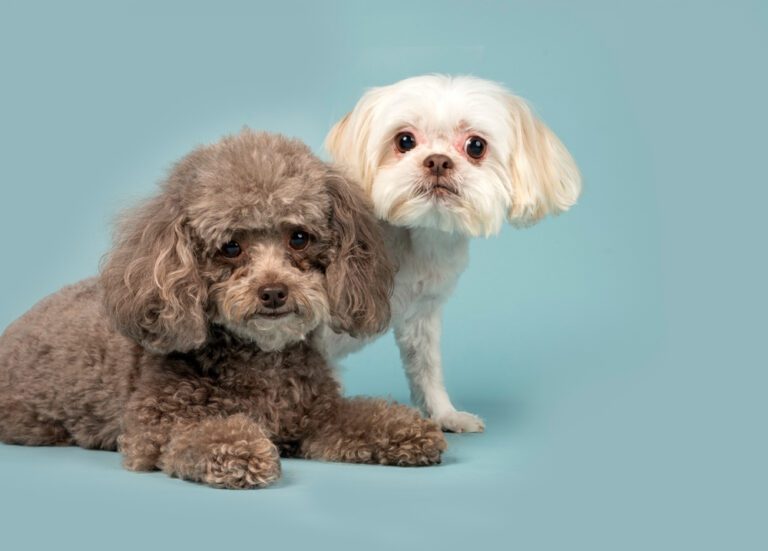
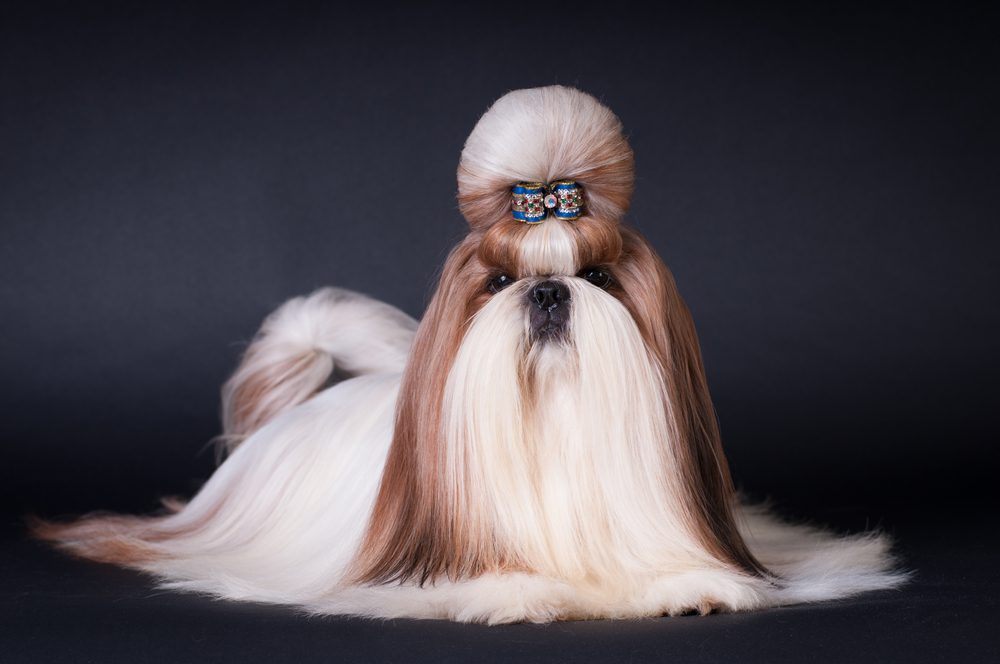
Shih Tzu History and Origin: From Tibetan Monks to the Imperial Court and Beyond
Disclosure: This article contains affiliate links. As an Amazon Associate, Shih Tzu Pedia earns from qualifying purchases, at no extra cost to you.
How we researched this article: This history is based on the American Kennel Club (AKC), the American Shih Tzu Club, the Shih Tzu Club (UK), the official AKC breed standard, and a 2004 genetic study of 85 dog breeds published in Science. Where historians disagree or records are thin, we say so. Every source is listed at the end. Last reviewed: September 2026.
The Shih Tzu has one of the most colorful histories in the dog world. Its story runs from Tibet and the Chinese imperial court to a near disappearance in the 20th century and a rescue by a handful of breeders in England and Scandinavia.
This guide explains where the breed came from, what is known for certain, what is legend, and what that history means for Shih Tzu owners today.
Shih Tzu History at a Glance
| Fact | Details |
|---|---|
| Region of origin | Tibet and China |
| Where the breed was developed | The Chinese imperial court |
| Name meaning | “Lion.” The breed is often called the “lion dog.” |
| First dogs in England | 1928, brought by Lady Brownrigg |
| UK Kennel Club register | 1940 |
| American Shih Tzu Club founded | 1963 |
| AKC recognition | 1969, in the Toy Group |
| AKC popularity | No. 21 of all breeds in 2025 |
| Size (AKC standard) | 9 to 10½ inches tall; ideally 9 to 16 pounds |
Where Did Shih Tzus Come From?
The Shih Tzu comes from Tibet and China. The American Kennel Club says the breed descends from lion-like dogs from Tibet that were given to Chinese royalty as gifts. In China, these dogs were bred and refined at the imperial court into the Shih Tzu we know today.
The lion image matters. In Buddhist tradition, the lion is a sacred animal, and small dogs that looked like lions were prized. The American Shih Tzu Club notes that once Buddhism reached China, dogs became especially valued because of this link to the lion. The name Shih Tzu comes from the Mandarin word for lion.
Did Tibetan monks breed the Shih Tzu?
This is one of the most searched questions about the breed, and the honest answer is: partly. Small, long-coated dogs were kept in Tibet, including in monasteries, and these dogs are thought to be ancestors of Tibetan breeds such as the Lhasa Apso. Tradition holds that dogs like these were sent from Tibet to the Chinese court as gifts.
However, there are no reliable records showing that Tibetan monks bred the Shih Tzu as a separate breed. The Shih Tzu itself was developed in China. Historians still debate how much of the breed is Tibetan and how much is Chinese, and it is widely believed to be related to both the Lhasa Apso and the Pekingese. Be cautious of websites that give exact dates, such as a specific year in the 600s, for the breed’s first appearance. Those claims are not well supported.
What DNA research shows
A 2004 study in the journal Science analyzed DNA from 85 dog breeds. It placed the Shih Tzu in a small group of breeds, mostly from Asia and Africa, whose DNA was most distinct from modern European breeds. That group also included the Lhasa Apso and Pekingese. This suggests old roots and long isolation. It does not give the breed an exact age.
Life in the Chinese Imperial Court
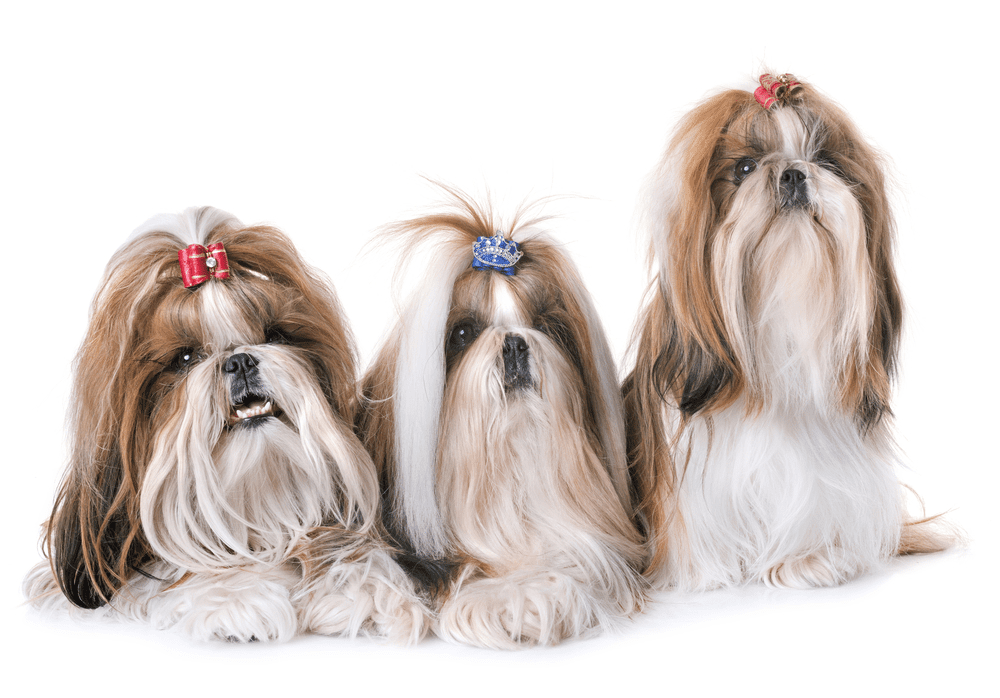
- Ming Dynasty (1368 to 1644). The AKC notes that the Shih Tzu lived with Chinese royalty during this period.
- Palace breeding. Court eunuchs raised the dogs, and fine examples appeared in palace art.
- Empress Dowager Cixi. In the late 1800s and early 1900s, Cixi ran a breeding program for the palace dogs, according to the AKC.
- Kept inside China. The American Shih Tzu Club says no Shih Tzu left China until the 20th century, even though other breeds, such as the Pekingese, were sent abroad earlier.
After Cixi died in 1908, the palace breeding program ended, and the breed’s future became uncertain.
Near Extinction and the Rescue of the Breed
The early 20th century was dangerous for the Shih Tzu. The palace kennels were gone, and the AKC reports that after the 1949 Communist revolution, all Shih Tzus in China were killed because the dogs were linked to wealth and the old imperial class.
The breed survived because a few dogs had already left China:
- 1928: Lady Brownrigg, an Englishwoman living in China, brought two Shih Tzus to England, a male named Hibou and a female named Shu-ssa, according to the Shih Tzu Club (UK).
- 1933: A third foundation dog, Lung-fu-ssa, arrived in Ireland.
- Scandinavia: Other dogs went to Scandinavia, where breeders kept their own lines.
- 1934 to 1935: The breed was separated from other small long-coated Asian dogs, and the club in England took the name the Shih Tzu Club.
- 1940: The UK Kennel Club gave the breed its own register. The first two UK champions, both owned by Lady Brownrigg, gained their titles in 1947.
- 1952: Breeder Freda Evans made a controversial cross with a Pekingese to address faults in the breed.
A very small gene pool. The AKC states that today’s Shih Tzus descend from just 13 dogs imported into England and Scandinavia between 1928 and 1952, plus the one Pekingese introduced in 1952. A small founding population is one reason responsible breeders value health testing.
How the Shih Tzu Came to America
- 1950s: American military families stationed in Europe began bringing Shih Tzus home. The American Shih Tzu Club says more than 100 were exported to the United States between 1957 and 1963.
- 1955: The AKC accepted the breed into its Miscellaneous Class.
- 1963: Three separate U.S. breed groups united to form the American Shih Tzu Club.
- April 1, 1969: The AKC officially recognized the breed.
- September 1, 1969: Shih Tzus could compete for championships in the AKC Toy Group.
Today the Shih Tzu is one of the most popular breeds in the United States. It ranked No. 21 among AKC breeds in 2025.
What the Breed Standard Says Today
The AKC breed standard, approved in 1989, describes the Shih Tzu this way:
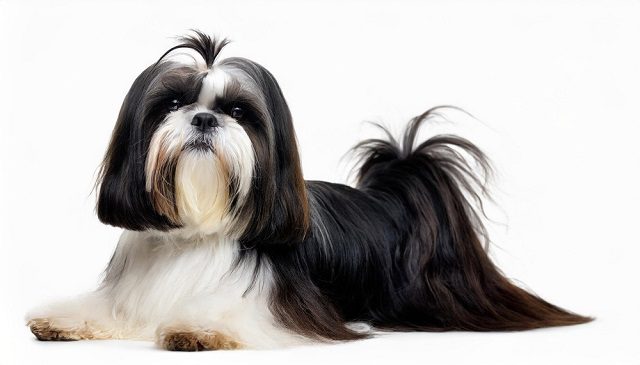
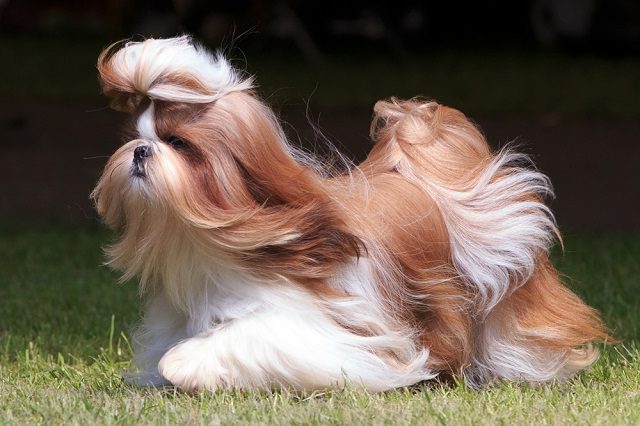
- General appearance: “a sturdy, lively, alert toy dog with long flowing double coat.”
- Size: 9 to 10½ inches at the shoulder, and not less than 8 or more than 11 inches. Ideal weight is 9 to 16 pounds.
- Eyes: very dark, but lighter in dogs with liver or blue pigment.
- Bite: undershot, with a broad, wide jaw.
- Colors: “All are permissible and to be considered equally.”
- Temperament: outgoing, happy, affectionate, friendly, and trusting toward all.
Colors and So-Called “Types”
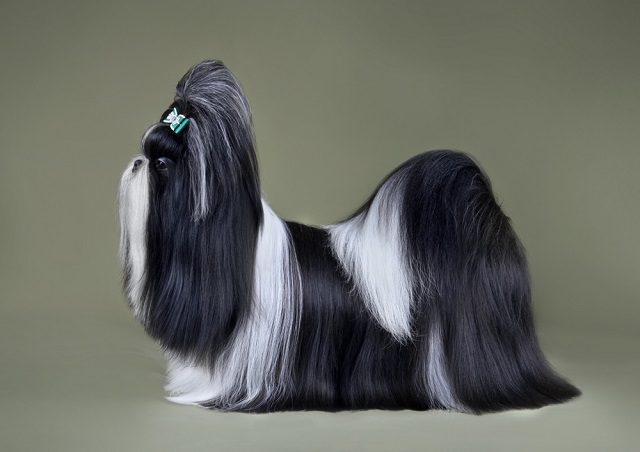
There is only one Shih Tzu breed. Many websites list “types” such as American, European, Imperial, or teacup Shih Tzus. These are not separate breeds or AKC varieties.
- Colors: every color is allowed in the AKC standard, including black, white, gold, liver, brindle, and many combinations. Solid black is caused by a dominant gene, so one copy is enough, according to the University of California, Davis Veterinary Genetics Laboratory. See our Shih Tzu colors guide.
- Imperial and teacup: these are marketing labels for undersized dogs, not recognized varieties. Very small dogs can face more health problems. See the truth about Imperial Shih Tzus.
- American and European: some people use these terms for differences in style between breeding lines. The breed standard does not recognize them as separate types.
What the Shih Tzu’s History Means for Owners
- A true companion dog. Shih Tzus were bred for centuries to live close to people. Most want to be with their family and do not do well left alone for long hours. See our guide to Shih Tzu personality.
- A flat face. The short muzzle makes breathing harder in heat and during exercise. See Shih Tzu breathing problems.
- Prominent eyes. Large eyes injure more easily. See our Shih Tzu eye care guide.
- Crowded teeth. Gum disease was the most common specific disorder in a 2024 study of more than 11,000 Shih Tzus.
- A long life. The same study found a median age at death of 12.7 years. See our Shih Tzu lifespan guide.
- A long coat. The flowing coat needs regular brushing. See our Shih Tzu grooming guide.
Starter Essentials for a New Shih Tzu
These picks come from our research-based guides. They suit the breed’s long coat, small mouth, and flat face.
- Chris Christensen 27 mm Oval Pin Brush. A long-pin brush made for long, silky coats. Check price on Amazon →
- Chris Christensen Greyhound-Style Buttercomb. A steel comb for finding tangles the brush missed. Check price on Amazon →
- TropiClean Detangler Spray. Helps the brush glide through the coat with less breakage. Check price on Amazon →
- Petsmile Professional Pet Toothpaste. Listed by the Veterinary Oral Health Council as an accepted product. Check price on Amazon →
- Voyager Step-in Air Dog Vest Harness. A lightweight mesh harness. Many vets suggest a harness instead of a neck collar for flat-faced breeds, to avoid pressure on the throat. Check price on Amazon →
For more choices, see the best brushes for Shih Tzus and our Shih Tzu puppy care guide.
Frequently Asked Questions
Where did the Shih Tzu originate?
The Shih Tzu comes from Tibet and China. Lion-like dogs from Tibet were given to Chinese royalty, and the breed was developed at the Chinese imperial court.
Did Tibetan monks breed Shih Tzus?
Small dogs were kept in Tibet, including in monasteries, and they are believed to be ancestors of Tibetan breeds. But there are no reliable records that monks bred the Shih Tzu itself. The breed was developed in China.
What does Shih Tzu mean?
Shih Tzu comes from the Mandarin word for lion. The breed is often called the lion dog because of its lion-like look, which had special meaning in Buddhist tradition.
When did the AKC recognize the Shih Tzu?
The AKC officially recognized the Shih Tzu in 1969, and the breed began competing in the Toy Group on September 1, 1969.
How many dogs saved the Shih Tzu breed?
According to the AKC, today’s Shih Tzus descend from 13 dogs imported into England and Scandinavia between 1928 and 1952, plus one Pekingese added in 1952.
Sources
- American Kennel Club. Shih Tzu History: Where the Breed Originated. Updated 2026.
- American Kennel Club. Official Standard of the Shih Tzu. Approved 1989.
- American Kennel Club. The Most Popular Dog Breeds of 2025.
- American Shih Tzu Club. A Brief History of the Shih Tzu.
- American Shih Tzu Club. Early Breed History.
- The Shih Tzu Club (UK). Breed History.
- American Lhasa Apso Club. Breed History.
- Parker HG, Kim LV, Sutter NB, et al. Genetic structure of the purebred domestic dog. Science, 2004.
- UC Davis Veterinary Genetics Laboratory. Dominant Black (K Locus).
- Dale F, Brodbelt DC, West G, Church DB, Lee YH, O’Neill DG. Demography, common disorders and mortality of Shih Tzu dogs under primary veterinary care in the UK. Canine Medicine and Genetics, 2024;11:2.
This article is for general information. It is not a substitute for advice from your veterinarian. Read our medical disclaimer.