
Male vs Female Shih Tzu: Real Differences in Size, Temperament, Health, and Care
This article contains affiliate links. If you purchase through these links, Shih Tzu Pedia may earn a small commission at no additional cost to you. We only recommend products we have researched and believe provide genuine value. See our full Affiliate Disclosure for details.
The question of whether to choose a male or female Shih Tzu comes up in almost every conversation between a prospective owner and a breeder. It is also one of the most consistently misunderstood topics in the breed, because most of what circulates online is based on anecdote rather than evidence.
The honest answer is this: the differences between male and female Shih Tzus are real but modest. Individual temperament, early socialization, training consistency, and whether the dog is spayed or neutered will each have a larger influence on behavior than sex alone. That said, there are genuine, documented patterns worth understanding before making a choice — particularly regarding health risks tied to reproductive status.
This guide separates the verified differences from the myths, covers gender-specific health considerations supported by veterinary research, and gives every prospective owner the information they need to make a well-reasoned decision.
Physical Differences: How Much Does Sex Actually Matter?
Size and Weight
The AKC breed standard sets the same weight range for both sexes: 9 to 16 lb (4.1 to 7.3 kg), with a height of 9 to 10.5 inches (23 to 27 cm) at the withers. In practice, males tend to sit toward the upper end of this range — carrying slightly more muscle mass — while females typically fall toward the middle. The difference is rarely dramatic and is often invisible to a casual observer.
A Shih Tzu’s weight is more meaningfully influenced by diet, activity level, and whether the dog is spayed or neutered than by its sex. Spaying and neutering both reduce metabolic rate slightly, which increases obesity risk for either sex if food intake is not adjusted after surgery. For guidance on healthy weight management, see: How Much Should a Shih Tzu Weigh?
Coat and Facial Features
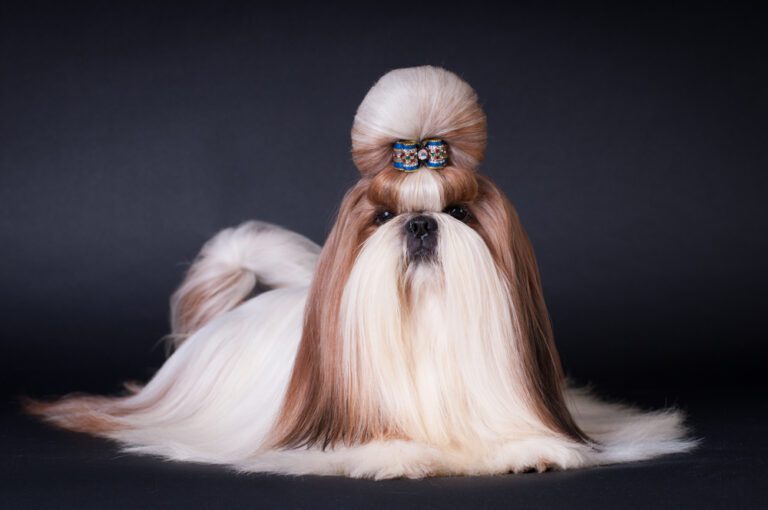
Males and females share the same double-coat structure — a soft undercoat beneath a longer, silky outer coat — and require identical grooming care regardless of sex. Some experienced breeders note that unspayed females occasionally experience coat texture changes during heat cycles and pregnancy due to hormonal fluctuation, while males typically maintain consistent coat condition year-round when neutered. Neither sex has an inherent advantage in terms of coat quality when properly cared for.
Facial structure is broadly identical between sexes. Some breeders observe that males occasionally present a slightly wider, squarer jawline, but this is not a reliable distinguishing feature at the individual level.
Behavioral Differences
It is important to state clearly that behavioral research on canine sex differences consistently finds individual variation to be far greater than sex-based differences. A responsible Shih Tzu breeder from Arizona with decades of experience in the breed notes directly that “the key lies in the Shih Tzu’s temperament, not gender” and that both male and female Shih Tzus can be equally affectionate, equally trainable, and equally independent — depending on how they were raised, socialized, and handled.
With that important qualifier in place, the following patterns are consistently reported across breeder observations, owner experience, and canine behavior literature.
Affection and Bonding Style
Male Shih Tzus are frequently described as more overtly and consistently affectionate. They tend to bond broadly with all members of a household and maintain that bond with high frequency — following their people from room to room, seeking physical contact throughout the day, and responding visibly to emotional cues from their owners. They are generally more forgiving after conflict or correction, returning quickly to their baseline friendly state.
Female Shih Tzus are often described as more selective in their affection. They bond deeply, but may choose to engage on their own terms — offering affection when they initiate it rather than on demand. Many owners describe this as cat-like behavior. Once a female has formed a trusted bond, however, that loyalty is consistent and strong. Females may also show a preference for bonding to a single person in a multi-member household.
Neither pattern is superior. The right choice depends on the owner’s personality and expectations. Owners who want constant, freely given companionship often prefer males. Those who appreciate a dog with more emotional self-direction sometimes prefer females.
Training and Obedience
Both sexes are intelligent and capable of learning. Anecdotal evidence from breeders and training professionals suggests that male Shih Tzus are often slightly more eager to please, which can make early positive reinforcement training feel more responsive. Males may be more food-motivated and quicker to repeat behaviors that earn a reward.
Female Shih Tzus often learn just as quickly — sometimes faster — but may be more selective about when they choose to comply. Experienced trainers describe females as dogs that understand the command fully but apply an independent judgment about whether to execute it. This stubbornness is not a training failure; it is a temperament characteristic that requires a consistent, patient, and non-repetitive training approach.
Neither sex is significantly harder to train than the other when the owner applies consistency and positive reinforcement throughout. The single biggest predictor of training success in Shih Tzus is not sex — it is how early and consistently training began. For the full framework, see: Shih Tzu Training 101
Territorial Behavior and Marking
Unneutered males are significantly more likely to mark territory indoors by lifting a leg and urinating on vertical surfaces. This behavior is driven by testosterone and typically begins at or around sexual maturity, between 6 and 9 months of age. Neutering before this point substantially reduces or eliminates marking behavior. A study cited by the Journal of the American Veterinary Medical Association found that neutering reduced urine marking behavior in male dogs by approximately 50 to 60%. Neutering early — before the behavior is established — produces the most reliable results.
Females in heat may also display territorial behaviors, vocalization, and restlessness, which are eliminated by spaying.
Energy Levels
Both sexes have moderate energy levels consistent with the breed standard. Short daily walks and indoor play sessions satisfy exercise requirements for either sex. Males may sustain playful behavior for slightly longer bursts, while females may disengage from play more readily once their threshold is met. Neither difference significantly affects daily care requirements. For full exercise guidance, see: Shih Tzu Exercise Needs
Health Differences
Both sexes share the breed’s well-documented health vulnerabilities — brachycephalic airway syndrome, dental disease, eye conditions, renal dysplasia, and IVDD — as covered in detail in our Shih Tzu Characteristics Guide. However, reproductive status creates meaningful health differences between males and females that are directly affected by the spay and neuter decision.
Female-Specific Health Risks
Pyometra:
Pyometra is a life-threatening bacterial infection of the uterus that develops in unspayed females following heat cycles. Research published by veterinary clinicians estimates that approximately 23% of intact female dogs develop pyometra before reaching 10 years of age. The condition requires emergency surgery and carries a real mortality risk if treatment is delayed. Spaying eliminates this risk.
Mammary tumors:
Approximately 25% of unspayed female dogs develop mammary tumors at some point in their lives, with roughly half of those tumors being malignant. Research cited by the American Veterinary Medical Association indicates that spaying before the first heat cycle reduces mammary tumor risk by approximately 99.5%. That protection decreases to approximately 92% if spaying occurs after the first heat and 74% after the second heat. The protective benefit remains meaningful even if spaying occurs later in life.
For Shih Tzus specifically, veterinary guidance on spay timing for females generally recommends between 6 and 9 months of age, ideally before the first heat cycle, though discussing breed-specific considerations with your veterinarian is essential before making a final decision.
Mammary cancer and the Shih Tzu:
The Shih Tzu has documented susceptibility to mammary cancer as a breed. Our dedicated article covers this in full detail: Why Mammary Cancer Targets Shih Tzus More Than Other Breeds
Male-Specific Health Risks
Urinary stones: Unneutered male Shih Tzus are more susceptible to urinary stones than females, due to their narrower urethra. A urinary obstruction in a male dog is a medical emergency. Owners should contact a veterinarian immediately if a male Shih Tzu stops urinating for more than a few hours.
Testicular cancer and prostate disease:
Unneutered males face the risk of testicular cancer and benign prostatic hyperplasia as they age. Neutering eliminates testicular cancer risk entirely and significantly reduces prostate disease risk. The AKC Canine Health Foundation notes that neutering effects on cancer risk vary by breed and timing, and recommends discussing the optimal age for neutering with a veterinarian familiar with small-breed dogs.
Lifespan by Sex
Research on canine lifespan by sex consistently shows a small advantage for females. A study conducted by Banfield Pet Hospital using data from over 2.2 million dogs found that neutered male dogs lived approximately 18% longer than unneutered males, while spayed females lived approximately 23% longer than unspayed females. For the Shih Tzu specifically, our dedicated article explores this topic in full: Shih Tzu Lifespan by Gender
The Spay and Neuter Decision
Spaying and neutering are among the most consequential health decisions an owner makes for a Shih Tzu. The decision affects behavior, long-term health risk profile, and lifespan — for both sexes.
For females, the primary benefits are the elimination of pyometra risk and a substantial reduction of mammary tumor risk. The timing of spaying relative to heat cycles directly affects the magnitude of that protection, as the research above demonstrates. For females, veterinarians generally recommend spaying between 6 and 9 months, though breed-specific guidance should always come from a veterinarian with small-breed experience.
For males, the primary benefits are elimination of testicular cancer risk, reduction of prostate disease risk, and significant reduction of marking and roaming behavior. The AKC Canine Health Foundation emphasizes that neutering effects are breed-specific and timing matters — owners should work with their veterinarian rather than applying a universal rule.
Both procedures carry a post-surgical weight gain risk. Metabolic rate decreases following gonadectomy in dogs. Owners should adjust food portions after surgery to prevent obesity, which compounds every brachycephalic health condition the Shih Tzu already faces.
For a full guide to neutering in the Shih Tzu specifically, see: Neutering a Shih Tzu
Choosing the Right Shih Tzu for Your Household
The following framework helps narrow the decision based on actual household variables rather than assumptions.
If you want constant, freely given affection
Males tend to offer affection more consistently and with less selectivity. They are often described as more emotionally straightforward — happy, eager to engage, and quicker to forgive. If constant companionship is the primary reason for getting a Shih Tzu, many experienced owners and breeders lean toward recommending a male.
If you appreciate a dog with more self-direction
Females form deep bonds but engage on their own schedule. Owners who find a more independent personality appealing — a dog that chooses when to approach rather than being perpetually under your feet — often find females a better personality match.
If you have other dogs in the household
Same-sex pairs — particularly two intact males — can be more prone to territorial conflict. A male-female pairing, with both dogs spayed or neutered, is typically the most harmonious multi-dog configuration for this breed. Two females can coexist well with proper introduction and socialization. For guidance on companion pairings, see: Pros and Cons of Having Two Shih Tzus
If this is your first dog
Either sex is suitable for first-time owners. The Shih Tzu’s moderate exercise needs, adaptable temperament, and strong people orientation make both males and females manageable for owners without prior dog experience. Commitment to early training, socialization, and consistent grooming matters far more than sex selection for first-time owners.
Recommended Gear for Either Sex
The daily care requirements for male and female Shih Tzus are identical. These products are the most effective across both sexes for the breed’s specific coat, dental, and exercise needs.
Chris Christensen Big G Slicker Brush — Essential for daily coat maintenance in either sex. Flexible pins reach through the double coat without skin irritation. View on Amazon
Andis Steel Greyhound Comb — Used after brushing to confirm no mats remain at skin level. Dual tooth-spacing handles both body coat and fine facial hair. View on Amazon
Vet’s Best Enzymatic Dog Toothbrush and Toothpaste Kit — Daily dental brushing from puppyhood is essential for both sexes. Over 80% of Shih Tzus develop dental disease by age 3, regardless of sex. View on Amazon
Puppia Soft Step-In Dog Harness — A chest harness is required for this breed in place of a neck collar, which creates tracheal pressure risk in brachycephalic dogs. Suitable for both sexes in all available sizes. View on Amazon
Simple Solution Disposable Dog Diapers — For owners of unspayed females, disposable diapers are an effective hygiene management tool during heat cycles, which occur approximately every six months and last around three weeks. View on Amazon
FAQ’s
Is a male Shih Tzu better than a female?
There isn’t a “better” gender for Shih Tzus, as males and females share similar characteristics and behaviors. Choosing between a male or female should be based on personal preference and compatibility with your lifestyle. Both can make great companions and bring joy to your life.
Are male and female Shih Tzu different in size and weight?
On average, both sexes weigh between 9 and 16 pounds and are 8-11 inches tall, with males slightly heavier than females. However, the weight of a Shih Tzu can also depend on their diet and overall health.
What are the grooming requirements for male and female Shih Tzu?
Both sexes have similar coat types, with a long, thick, and silky coat that requires regular grooming to keep it looking its best. This includes regular brushing, bathing, and trimming.
Are there any behavioral differences between male and female Shih Tzu?
Both sexes are intelligent and eager to please, making them relatively easy to train. However, females may be slightly more stubborn and independent than males, making training a bit more challenging.
What are the common health issues for Shih Tzu?
Some common health problems affecting both male and female Shih Tzus include respiratory, dental, and ear infections, eye problems, and hip dysplasia.
What is the best way to choose between a male or female Shih Tzu?
Ultimately, the choice between a male or female Shih Tzu should be based on personal preference and compatibility with your lifestyle. It’s always best to consult with a veterinarian or a breeder for specific advice and to get to know the dog before deciding.
Conclusion
Choosing between a male and female Shih Tzu is a meaningful decision, but it should not be made on myth. The physical differences between the sexes are minimal. The behavioral differences are real but modest, and individual temperament, early socialization, and training quality will each outweigh sex as predictors of how your dog behaves. What matters far more than sex is the reproductive health decision: spaying and neutering are among the most impactful health interventions available to Shih Tzu owners, with documented effects on cancer risk, infection risk, lifespan, and behavior. Whichever sex you choose, commit to the right timing on that decision, invest in early training, and work with a breeder who prioritizes temperament alongside conformation. That combination produces the companion this breed was always bred to be. For the full picture on what owning a Shih Tzu involves from day one, read our complete Shih Tzu Puppy Care Guide.