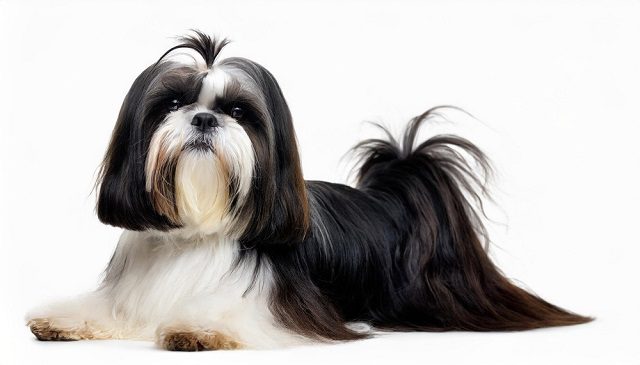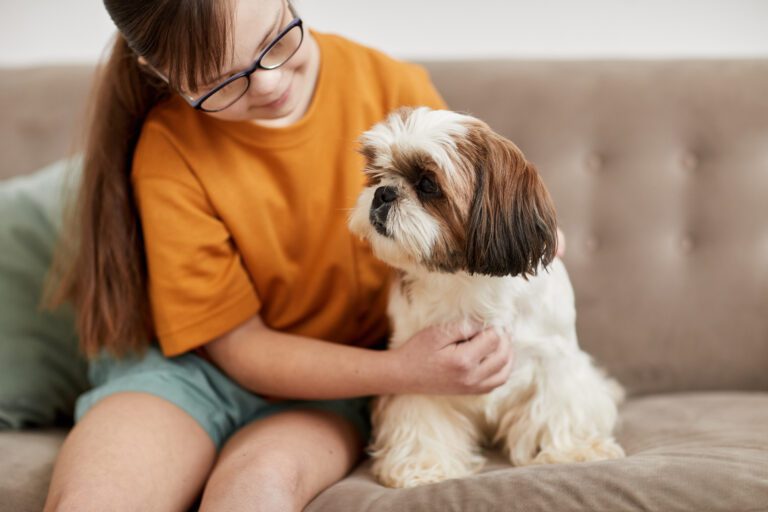
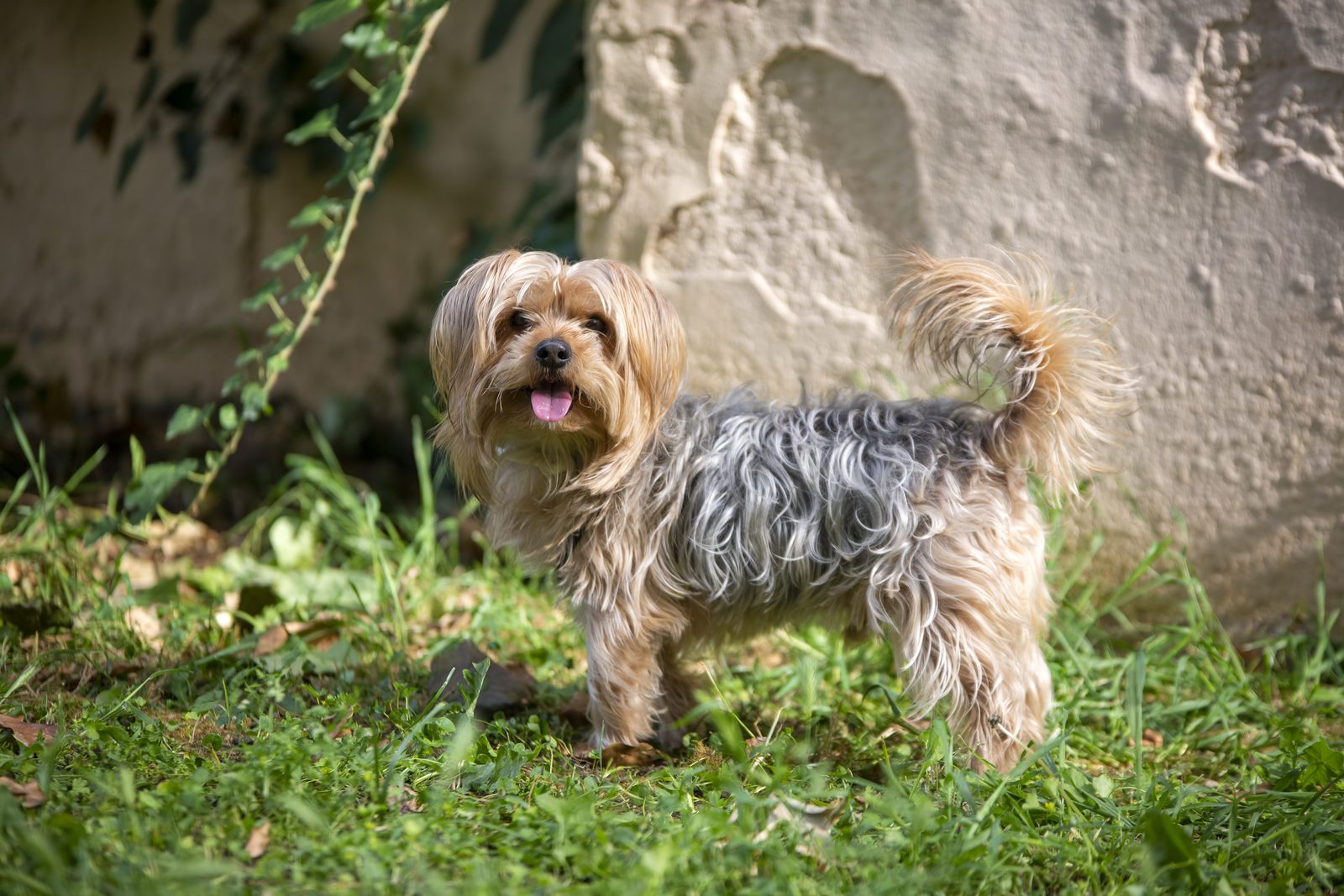
Shorkie (Shih Tzu Yorkie Mix): Size, Temperament, Health and Care
How we researched this article: This guide is based on the American Kennel Club’s breed profiles for the Shih Tzu and Yorkshire Terrier, VCA Animal Hospitals’ veterinary breed and health articles, a University of California, Davis study of more than 90,000 dogs, and the American Shih Tzu Club. Every source is listed at the end. Last reviewed: November 2026.
A Shorkie is a cross between a Shih Tzu and a Yorkshire Terrier. It is a mixed-breed dog, not a recognized breed, so there is no standard for its size, coat or temperament. Most Shorkies are small, long-coated companion dogs that need regular grooming and plenty of dental care, and they can inherit the health risks of either parent.
Because a Shorkie can take after either side, the most reliable way to know what you’re getting is to understand both parents. That’s what this guide does, using breed-club and veterinary sources rather than sellers’ claims.
Quick answer: what should I know about Shorkies?
- A Shorkie is a Shih Tzu × Yorkshire Terrier cross, sometimes called a “Shih Tzu Yorkie mix.”
- Expect a small dog. The parents range from about 7 pounds (Yorkie) to 9–16 pounds (Shih Tzu), and a Shorkie can land anywhere in or between those ranges.
- The long coat needs brushing every day or two, or a short trim from a groomer.
- Brush their teeth: both parent breeds are prone to gum disease.
- No dog is truly hypoallergenic, and a mix’s coat is less predictable than a purebred’s.
What is a Shorkie?
The Shorkie is a first-generation or later cross of two toy breeds: the Shih Tzu, a Chinese companion dog, and the Yorkshire Terrier, which was developed in England to catch rats in mills (VCA, Yorkshire Terrier). The two have very different backgrounds. One was bred to sit in laps; the other was bred to hunt, and still has a terrier’s spark.
Shorkies cannot be registered as a breed with the American Kennel Club. The AKC does welcome mixed-breed dogs through its Canine Partners program, but that is enrollment as a mixed breed, not breed registration. The American Shih Tzu Club is openly critical of “designer dog” crosses, warning that many of the Shih Tzu’s defining traits are genetically recessive and that first-generation puppies are unpredictable.
For a wider look at crosses, see our guide to Shih Tzu mixes.
Shorkie size: how big do Shorkies get?
There is no official Shorkie size. The best guide is the parents’ breed standards, from the American Kennel Club:
| Shih Tzu | Yorkshire Terrier | |
|---|---|---|
| Height | 9 to 10.5 inches | 7 to 8 inches |
| Weight | 9 to 16 pounds | 7 pounds |
| Life expectancy | 10 to 18 years | 11 to 15 years |
| Source | AKC Shih Tzu | AKC Yorkshire Terrier |
Most Shorkies fall somewhere in that span, but individual puppies vary, even within a litter. Seeing both parents, and asking the breeder for the adult weights of earlier litters, gives you a better idea than any online size chart. Keep in mind that a Yorkie parent bred to be extra tiny raises the risks that come with very small dogs, such as low blood sugar in puppies.
To check whether your adult dog is at a healthy weight, our Shih Tzu weight guide explains how to use a body condition check rather than the scale alone.
Shorkie temperament
Expect a blend of a lap dog and a terrier. VCA’s veterinary breed profiles describe the two parents like this:
| Trait | Shih Tzu | Yorkshire Terrier |
|---|---|---|
| Personality | Affectionate lap dog and playful companion | Spunky, busy and often mischievous |
| With strangers | Outgoing | Tends to be aloof; needs early socialization |
| With other dogs | Good with other dogs and pets | May pick fights with larger dogs and chase small pets |
| Training | Learns quickly but has a stubborn streak | Learns quickly but bores quickly |
| Barking | Average | Some bark a lot |
| House training | Harder than many breeds | Harder than many breeds |
Sources: VCA, Shih Tzu and Yorkshire Terrier.
Both parents do best with reward-based training using food or games, and both can be slow to house-train. Start early, keep sessions short, and stay consistent. Our Shih Tzu potty training guide works just as well for a Shorkie. If yours turns out to be a talker, see our barking guide for reward-based ways to calm it.
Both parents are small enough to be hurt by rough handling, so supervise young children and teach them to sit on the floor when holding the dog.
Shorkie coat, colors and grooming
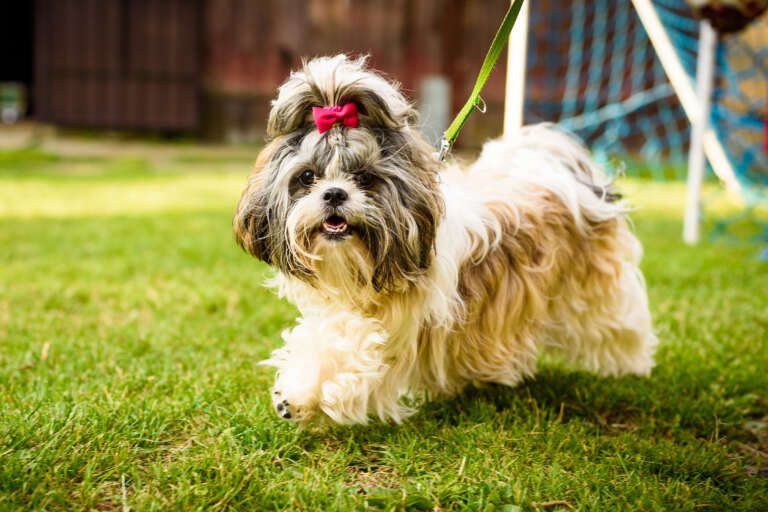
Both parents have long, low-shedding coats. The Yorkie’s is long, fine and straight, and Yorkie puppies are born black and tan, with the black gradually changing to blue-gray as they grow (VCA, Yorkshire Terrier). The Shih Tzu’s coat is long and dense and comes in many colors (AKC, Shih Tzu). A Shorkie’s coat color can therefore change as it matures, so a puppy’s color is not a promise of its adult color.
Plan on one of two routines:
- Long coat: brush and comb right down to the skin every day or two to prevent mats, which both VCA breed profiles recommend. Keep hair out of the eyes, either trimmed short or tied in a top knot, and check the hair around the bottom for hygiene.
- Short trim: many owners of both parent breeds have their dogs clipped into an easy-care trim by a professional groomer (VCA, Shih Tzu). You still need to brush between visits.
Our Shih Tzu grooming guide walks through brushing, bathing and nail care step by step, and the same tools work for a Shorkie.
Shorkie health problems
Mixed breeding doesn’t guarantee a healthier dog. A UC Davis study of more than 90,000 dogs found that 13 of 24 inherited disorders were about as common in mixed breeds as in purebreds; 10 were more common in purebreds and one was more common in mixed breeds (UC Davis, 2013). A Shorkie can inherit problems from either side. The conditions below are ones VCA Animal Hospitals links to the Shih Tzu, the Yorkshire Terrier, or both.
| Condition | What it is | Linked to |
|---|---|---|
| Dental (periodontal) disease | Plaque and tartar damage the gums and the tissues holding the teeth. Small breeds’ crowded teeth make it more likely. | Both parents |
| Tracheal collapse | The windpipe’s cartilage rings weaken and flatten, causing a honking cough. | Both parents |
| Bladder stones | Mineral stones form in the bladder and can block urine flow, especially in males. | Both parents |
| Portosystemic (liver) shunt | A blood vessel bypasses the liver, so toxins aren’t filtered properly. | Yorkshire Terrier |
| Brachycephalic airway syndrome | A short face narrows the airways, causing noisy breathing and heat intolerance. | Shih Tzu (if the puppy inherits a flat face) |
| Retained baby teeth | Puppy teeth don’t fall out, crowding the adult teeth. | Small breeds generally |
Kneecap problems (luxating patella) are also common in toy and small breeds, so ask your vet to check the knees at puppy visits.
Low blood sugar in puppies. VCA notes that very small Shih Tzu and Yorkie puppies should be fed often to prevent hypoglycemia, a serious condition to which tiny puppies are prone (VCA). Feed your Shorkie puppy small meals several times a day and ask your vet what schedule suits its size.
Daily tooth brushing is the single most useful habit for this mix. Our Shih Tzu teeth care guide shows how to get a small dog used to it.
Are Shorkies hypoallergenic?
No dog is completely hypoallergenic. The AKC does include both the Shih Tzu and the Yorkshire Terrier among breeds that often suit allergy sufferers. It explains that what helps is a purebred’s predictable, low-shedding coat, which may spread less dander (AKC). A mix doesn’t come with that predictability. If someone in your home has allergies, spend time with the actual puppy and its parents before you commit.
Exercise and daily care
Shorkies don’t need long runs. For both parent breeds, VCA suggests a walk around the block once or twice a day plus indoor games and tricks for mental exercise. Dog parks are best avoided unless only small dogs are allowed together. If your Shorkie has a shorter Shih Tzu muzzle, keep exercise gentle in hot weather, since short-faced dogs overheat easily (VCA, Shih Tzu). See our guide to Shih Tzus in hot weather.
Is a Shorkie right for you?
| A Shorkie may suit you if… | Think twice if… |
|---|---|
| You want a small, portable companion | You have very young children who may handle it roughly |
| You will brush daily or pay for regular grooming | You want a low-maintenance coat |
| You can train with patience and treats | You want a dog that is easy to house-train |
| You will brush its teeth and keep up vet checks | You expect a mix to be free of breed health problems |
If you buy, choose a breeder who health-checks both parents, lets you meet them, and gives you the puppy’s vet records. Be wary of anyone selling “teacup” Shorkies; extremely small size brings its own health problems, as we explain in our imperial and teacup Shih Tzu guide. Shelters and rescues also take in small mixes, so they’re worth checking too.
Shorkie FAQs
What is a Shorkie?
A Shorkie is a mixed-breed dog from a Shih Tzu and a Yorkshire Terrier. It is not a recognized breed, so its size, coat and personality vary from dog to dog.
How big do Shorkies get?
There is no standard. The parents range from about 7 pounds (Yorkshire Terrier) to 9–16 pounds (Shih Tzu), according to the AKC, and most Shorkies fall in or between those ranges.
How long do Shorkies live?
There is no reliable lifespan data for the cross itself. The AKC lists life expectancies of 10 to 18 years for the Shih Tzu and 11 to 15 years for the Yorkshire Terrier.
Do Shorkies shed?
Both parents have low-shedding coats, so most Shorkies shed little. Loose hair tangles into the coat instead, which is why regular brushing matters.
Do Shorkies bark a lot?
Some do. VCA notes that some Yorkshire Terriers bark a lot and recommends discouraging it from an early age with reward-based training.
Sources
- American Kennel Club. Shih Tzu Dog Breed Information.
- American Kennel Club. Yorkshire Terrier Dog Breed Information.
- American Kennel Club. Best Dog Breeds for People With Allergies.
- American Kennel Club. AKC Canine Partners.
- VCA Animal Hospitals. Shih Tzu and Yorkshire Terrier breed profiles.
- VCA Animal Hospitals. Tracheal Collapse in Dogs; Portosystemic Shunt in Dogs; Calcium Oxalate Bladder Stones in Dogs; Dental Disease in Dogs; Persistent Deciduous Teeth in Dogs; Brachycephalic Airway Syndrome in Dogs; Luxating Patella in Dogs.
- University of California, Davis. Purebred dogs not always at higher risk for genetic disorders, study finds. May 28, 2013.
- American Shih Tzu Club. The Facts About “Imperial” Shih Tzu and “Designer Dogs”.
This article is for general information. It is not a substitute for advice from your veterinarian. Read our medical disclaimer.