Shih Tzu Eye Problems: Warning Signs, Emergencies, and Safe Eye Care
How we researched this article: This guide is based on veterinary ophthalmology reviews in Today’s Veterinary Practice (2026) and Veterinary Ophthalmology (2023), Colorado State University’s veterinary hospital, the Royal Veterinary College’s VetCompass study of corneal ulcers, and the Universities Federation for Animal Welfare. Every source is listed at the end. Last reviewed: September 2026.
Go to an emergency vet now if: your Shih Tzu’s eye is bulging or has come out of its socket. Keep your dog from pawing at it and go straight to the clinic. See a vet the same day if: your dog is squinting, holding an eye shut, pawing at its face, or has a cloudy, bluish, or very red eye. Eye problems in Shih Tzus can get worse within hours.
The Short Answer
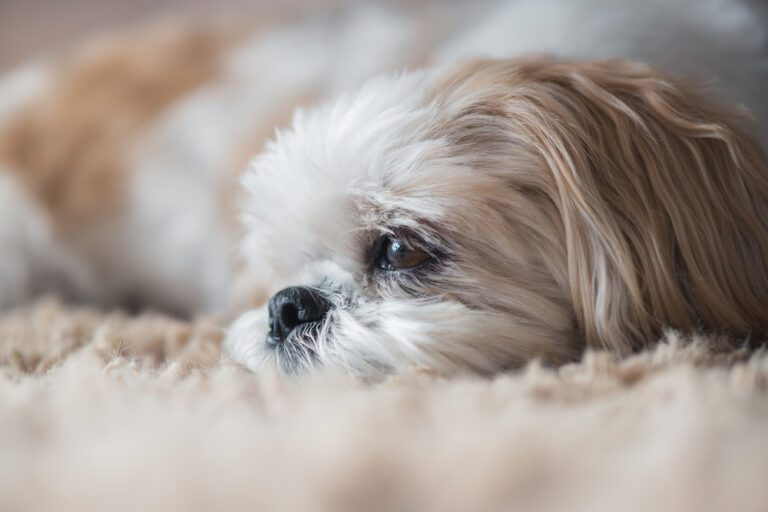
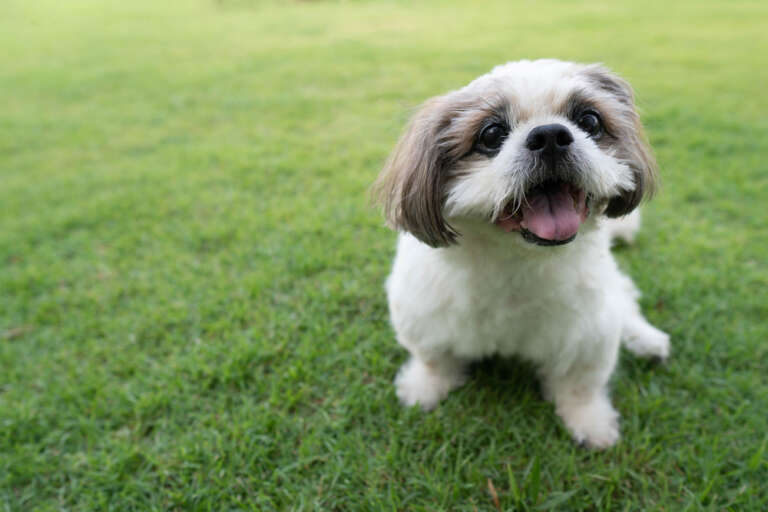
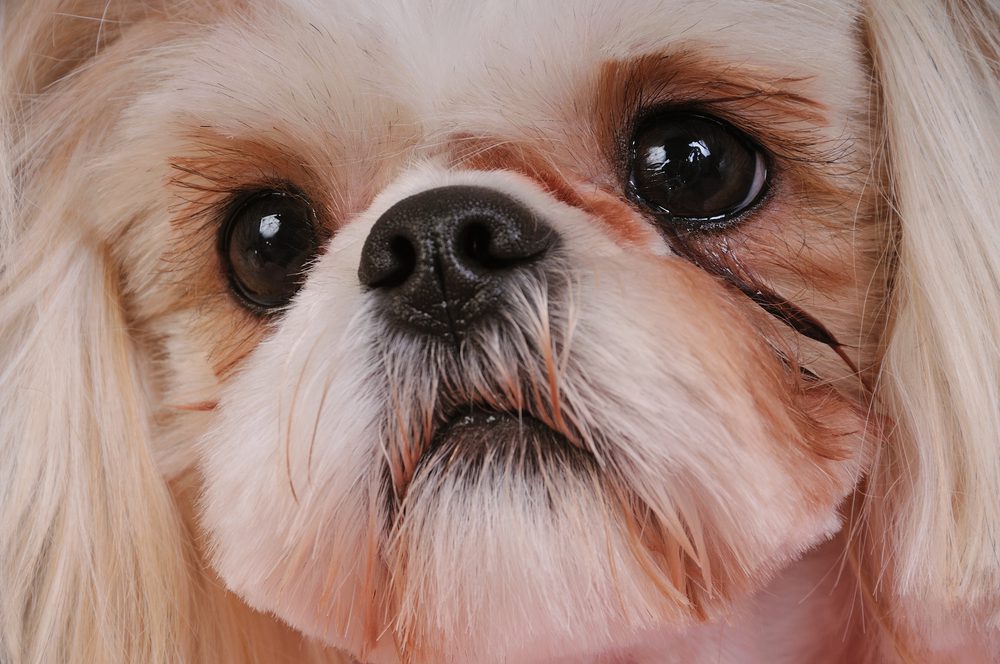
Shih Tzus have beautiful, large eyes, but their eye shape comes with real risks. As a flat-faced (brachycephalic) breed, Shih Tzus have shallow eye sockets and prominent eyes that are less protected than in longer-nosed breeds. Hair from the face and nose can also rub on the eye.
Veterinary ophthalmologists call this group of problems brachycephalic ocular syndrome. The most common issues are corneal ulcers, dry eye, pigment spreading over the eye, eyelids and hairs that rub the eye, and cherry eye.
Corneal Ulcers
A corneal ulcer is a wound on the clear front surface of the eye. It is painful and can threaten vision.
A Royal Veterinary College study of 104,233 dogs found that 3.45% of Shih Tzus had a corneal ulcer, compared with 0.80% of dogs overall. Flat-faced breeds as a group had 11 times the odds of crossbred dogs.
Signs: squinting, holding the eye closed, heavy tearing, pawing at the face, redness, or a cloudy or bluish spot on the eye. Ulcers need prompt veterinary treatment.
Dry Eye (Keratoconjunctivitis Sicca)
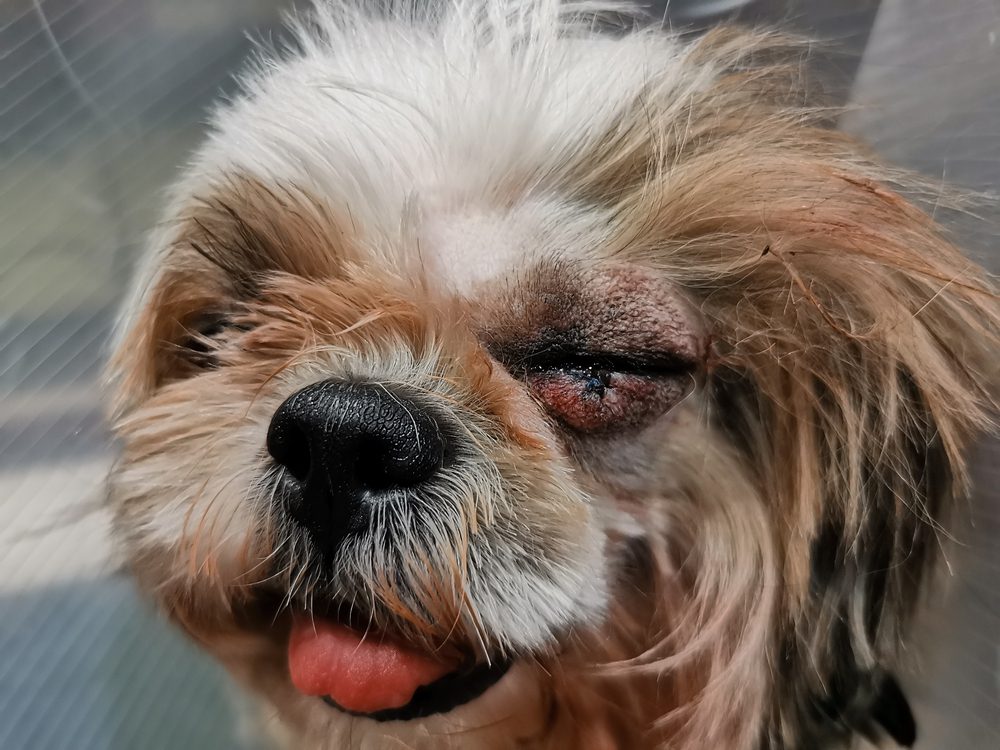
Dry eye means the eye does not make enough good-quality tears. Without enough tears, the eye becomes inflamed and more prone to ulcers and pigment.
Signs: thick, sticky, yellow or green discharge, a dull or dry-looking eye, redness, and frequent blinking. Your vet can measure tear production with a simple test. Dry eye is usually managed with daily eye medication, often for life.
Pigmentary Keratitis
This is brown pigment slowly spreading across the clear surface of the eye, usually from long-term irritation. It is often not painful, so owners may not notice it early. In advanced cases it can cause blindness. Regular vet eye checks help catch it early.
Eye Proptosis: An Emergency
Proptosis means the eye is pushed forward out of its socket, with the eyelids trapped behind it. A 2026 veterinary review notes that in flat-faced breeds, it does not take much force to cause this. It is a true emergency.
- Use a harness instead of a collar, so pulling does not put pressure on the neck.
- Avoid rough play, scruffing, and pressure around the head and neck.
- If it happens, keep your dog calm and go to an emergency clinic immediately.
Eyelash and Hair Problems
Hairs from the inner corner of the eye or the nose fold can rub on the eye. Some Shih Tzus also have extra eyelashes that grow toward the eye (distichiasis) or through the inside of the eyelid (ectopic cilia). These can cause irritation, ulcers, and pigment. A vet can remove problem lashes, and some dogs benefit from eyelid surgery.
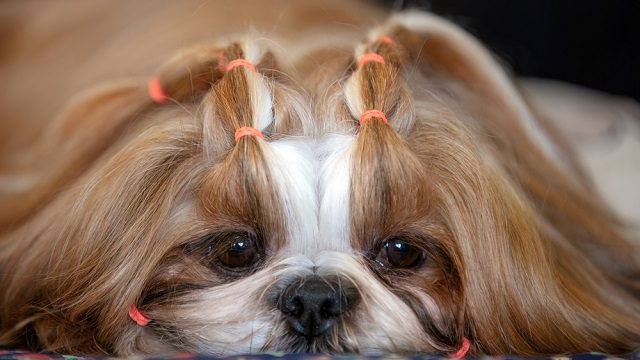
At home, keep the hair around the eyes trimmed short or tied up in a topknot so it cannot poke the eyes.
Cherry Eye
Cherry eye is a red, rounded swelling in the inner corner of the eye. It happens when the tear gland of the third eyelid slips out of place. It is more common in flat-faced breeds and is usually corrected with surgery that puts the gland back in place.
Eye Discharge and “Eye Boogers”
A small amount of clear or light brown crust in the corners of the eyes is normal. Thick, sticky, yellow, or green discharge is not, and can be a sign of dry eye or infection. Reddish-brown staining under the eyes is tear staining. See our colors guide for why it shows on light coats.
Brown streaks under the eyes are usually cosmetic; our guide to Shih Tzu tear stains explains how to clean them safely and when they signal an eye problem.
Safe Daily Eye Care
- Look at your dog’s eyes every day for redness, cloudiness, squinting, or discharge.
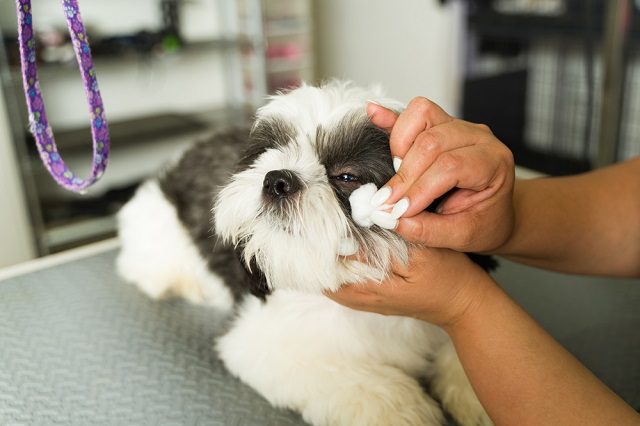
- Wipe away crust with a clean, soft cloth or gauze dampened with warm water. Use a fresh piece for each eye.
- Keep hair around the eyes trimmed or tied up.
- Book a yearly checkup, and ask your vet to check tear production.
Home Remedies to Avoid
Online articles sometimes suggest putting vinegar, honey, coconut oil, aloe vera, or tea in a dog’s eyes. Do not do this. These can irritate the eye, introduce germs, and delay treatment of problems like ulcers, which can worsen quickly. Also avoid human eye drops, including redness-relief drops, unless your vet recommends a specific product.
A sterile eye rinse made for dogs can help flush out dust or hair. If the eye stays red, squinty, or cloudy, see your vet.
Related: itchy skin and Shih Tzus and cats.
Frequently Asked Questions
Why do Shih Tzus have so many eye problems?
Their flat face, shallow eye sockets, and large, prominent eyes leave the eyes less protected. Facial hair can also rub on the eyes.
What does a corneal ulcer look like in a Shih Tzu?
Signs include squinting, holding the eye shut, heavy tearing, pawing at the face, and a cloudy or bluish spot. See a vet the same day.
Can I use home remedies for my Shih Tzu’s eye infection?
No. Do not put vinegar, honey, oils, aloe, or tea in your dog’s eyes. See a vet for any red, squinting, or cloudy eye.
What should I do if my Shih Tzu’s eye pops out?
This is an emergency. Keep your dog from pawing at it and go to an emergency vet clinic immediately.
How do I clean my Shih Tzu’s eye boogers?
Gently wipe with a soft cloth or gauze dampened with warm water, using a fresh piece for each eye. Thick yellow or green discharge needs a vet visit.
Sources
- Today’s Veterinary Practice. Understanding and Addressing Brachycephalic Ocular Syndrome. 2026.
- Sebbag L, Sanchez RF. The pandemic of ocular surface disease in brachycephalic dogs: The brachycephalic ocular syndrome. Veterinary Ophthalmology, 2023.
- O’Neill DG, et al. Corneal ulcerative disease in dogs under primary veterinary care in England. Canine Genetics and Epidemiology, 2017.
- Colorado State University Veterinary Health System. Brachycephalic Ocular Syndrome. 2026.
- Universities Federation for Animal Welfare. Shih Tzu: Brachycephalic Ocular Syndrome.
- Clinician’s Brief. Top 5 Ocular Complications of Brachycephaly in Dogs.
This article is for general information. It is not a substitute for advice from your veterinarian. Read our medical disclaimer.