

Spaying or Neutering a Shih Tzu: Best Age, Pros and Cons, and Recovery
Disclosure: This guide contains affiliate links. As an Amazon Associate, Shih Tzu Pedia earns from qualifying purchases, at no extra cost to you.
How we researched this article: This guide is based on the American Animal Hospital Association (AAHA) Canine Life Stage Guidelines, a 2020 University of California, Davis study that included Shih Tzus, Cornell University’s College of Veterinary Medicine, and the American College of Veterinary Surgeons. Every source is listed at the end. Last reviewed: September 2026.
Spaying (for females) and neutering (for males) are among the most common decisions Shih Tzu owners face. The right timing is not the same for every dog, and research has changed how vets think about it. This guide explains the benefits, the risks, and what the evidence says about timing for Shih Tzus.
Benefits of Spaying and Neutering
- No unplanned litters.
- No heat cycles. Spaying ends bleeding, mood changes, and visits from roaming males. See our Shih Tzu heat cycle guide.
- Prevents pyometra. Cornell describes this uterine infection as common in unspayed females. It can be life threatening.
- Lowers mammary tumor risk. Cornell and the American College of Veterinary Surgeons cite a much lower risk when females are spayed early. See our guide to cancer in Shih Tzus.
- Prevents testicular disease in males, and may reduce marking and roaming.
Possible Downsides
- Weight gain. Neutered dogs often need fewer calories. See our Shih Tzu weight guide.
- Some health risks linked to timing. In some breeds, early spaying or neutering is linked to more joint disorders, certain cancers, or urinary incontinence. Small breeds appear less affected, as explained below.
- Anesthesia risk. Shih Tzus are flat-faced, which makes anesthesia and recovery need extra care. Ask your vet how they manage airway risk, and whether any airway problems can be checked at the same time.

When Should You Spay or Neuter a Shih Tzu?
What AAHA recommends
The American Animal Hospital Association’s 2019 Canine Life Stage Guidelines suggest that small-breed dogs, expected to weigh under 45 pounds as adults, be spayed before the first heat, at about five to six months, and that males be neutered at about six months of age. Shih Tzus fall into this group.
What breed-specific research found
A 2020 study by Dr. Benjamin Hart and colleagues at UC Davis looked at 35 breeds, including 432 Shih Tzus. For Shih Tzus it found:
| Outcome | Males | Females |
|---|---|---|
| Joint disorders | None recorded, intact or neutered | None recorded, intact or spayed |
| Cancers studied | None recorded, intact or neutered | Higher in females spayed at 6 to 11 months (7 percent) and at 1 year (18 percent) |
| Urinary incontinence | Not applicable | Not recorded |
Based on this, the authors suggested that owners of male Shih Tzus can choose the neutering age. For females, they suggested spaying before 6 months or waiting until 2 years of age.
Keep the limits in mind. The study’s cancer count did not include mammary tumors, and the number of Shih Tzus was small. Waiting longer to spay means more heat cycles, which raises mammary tumor and pyometra risk. The best timing depends on your dog, your home, and your vet’s advice.

Recovery After Surgery
- Keep your dog quiet for about 10 to 14 days, or as long as your vet advises. No jumping on and off furniture.
- Check the incision daily. Call your vet for redness, swelling, discharge, or gaps.
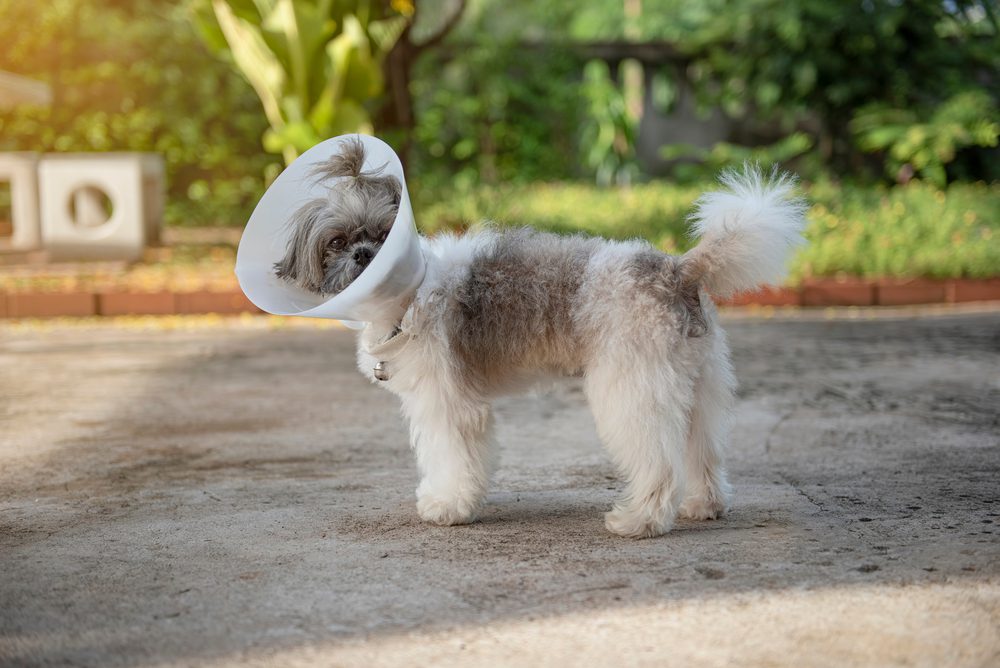
- Stop licking with a recovery suit or a soft cone. Licking is a common cause of infection.
- Do not bathe your dog until your vet says the incision has healed.
- Give pain medicine exactly as prescribed. Never give human pain relievers.
Recovery supplies
- Suitical Recovery Suit for Dogs. A breathable body suit that covers the belly incision, an alternative to a cone for many dogs. Measure your dog using the size chart. Check price on Amazon →
- Agape Soft Dog Cone for Small Dogs. An adjustable cloth cone that may be more comfortable than hard plastic. Make sure your dog cannot reach the incision while wearing it. Check price on Amazon →
Some flat-faced dogs find hard cones stressful or hard to eat in. Ask your vet which option suits your dog.
Frequently Asked Questions
What is the best age to spay a female Shih Tzu?
AAHA suggests spaying small breeds before the first heat, at about five to six months. A UC Davis study suggested spaying Shih Tzus before 6 months or waiting until 2 years. Ask your vet to help you weigh the options.
What is the best age to neuter a male Shih Tzu?
AAHA suggests about six months for small breeds. The UC Davis study found no increase in joint disorders or cancers in neutered male Shih Tzus at any age.
Will my Shih Tzu gain weight after neutering?
Many dogs need fewer calories after surgery. Measure meals and keep your dog active to prevent weight gain.
Is anesthesia risky for Shih Tzus?
Flat-faced breeds need extra care during anesthesia and recovery. Ask your vet about their monitoring and airway plan.
How long does recovery take?
Most dogs need about 10 to 14 days of rest and incision protection. Follow your vet’s instructions.
Sources
- American Animal Hospital Association. When Should I Spay or Neuter My Dog or Cat? and 2019 AAHA Canine Life Stage Guidelines.
- Hart BL, Hart LA, Thigpen AP, Willits NH. Assisting Decision-Making on Age of Neutering for 35 Breeds of Dogs: Associated Joint Disorders, Cancers, and Urinary Incontinence. Frontiers in Veterinary Science, 2020.
- Cornell University College of Veterinary Medicine. Dog Estrous Cycles.
- American College of Veterinary Surgeons. Mammary Tumors.
This article is for general information. It is not a substitute for advice from your veterinarian. Read our medical disclaimer.