How to Train a Shih Tzu: Positive Methods and First Skills
Disclosure: This article contains affiliate links. As an Amazon Associate, Shih Tzu Pedia earns from qualifying purchases, at no extra cost to you.
How we researched this guide: This article is based on position statements from the American Veterinary Society of Animal Behavior (AVSAB) on humane training and puppy socialization. Last reviewed: September 2026.
Shih Tzus are affectionate, people-focused dogs, and they respond well to gentle, reward-based training. This guide covers how to train a Shih Tzu, the first skills to teach, and how to build good habits for life.
The Best Way to Train a Shih Tzu: Rewards, Not Punishment
The American Veterinary Society of Animal Behavior recommends reward-based training for all dogs. Its 2021 position statement says there is no evidence that aversive training is necessary, and that aversive methods harm both welfare and the human-animal bond. Research links punishment-based training to more fear, anxiety, and aggression.
- Reward what you like. Give a tiny treat, praise, or play the moment your dog does the right thing.
- Keep sessions short. A few minutes, a few times a day, works better than one long session.
- Use small, soft treats. Zuke’s Mini Naturals are about 2 calories each, according to the brand. For hard skills, try high-value Pupford freeze-dried treats.
- Be consistent. Everyone in the house should use the same words and rules.
- End on a win. Finish each session with something your dog can do easily.
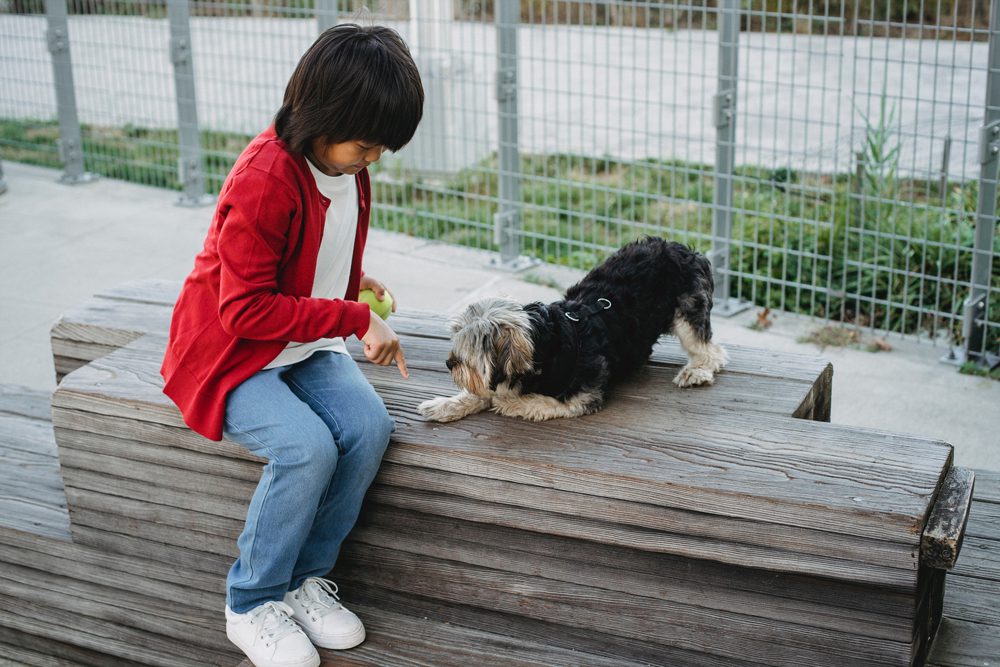
Start With Socialization
AVSAB calls the first three months of life the most important time for puppy socialization. It notes that puppies can start puppy classes as early as 7 to 8 weeks of age, after at least one set of vaccines given at least 7 days before the first class and a first deworming. AVSAB also points out that behavior problems, not infectious diseases, are the leading cause of death in dogs under three years old.
- Meet many kinds of people, gently and at your puppy’s pace.
- Hear everyday sounds, such as traffic and the vacuum.
- Practice handling paws, ears, and mouth, which makes grooming and vet visits easier for a Shih Tzu.
- Visit new places while carrying your puppy or in a stroller until your vet says it is safe to walk.
First Skills to Teach
| Skill | Why it matters |
|---|---|
| Name response | Gets your dog’s attention |
| Sit | An easy first skill and a polite way to greet |
| Come (recall) | Keeps your dog safe |
| Down and stay | Builds calm behavior |
| Leave it | Prevents eating dangerous things |
| Loose-leash walking | Makes walks pleasant and reduces pulling |
| Go to your bed or crate | Gives your dog a calm place to settle |
How to Teach “Sit”
- Hold a treat near your dog’s nose.
- Slowly move it up and back over the head. As the head goes up, the rear goes down.
- The moment your dog sits, say “yes” and give the treat.
- Add the word “sit” once your dog is doing it reliably.
- Practice in different rooms, then outside.
How to Teach “Come”
- Start indoors, a few steps away.
- Say your dog’s name and “come” in a happy voice, and back away.
- Reward generously when your dog reaches you.
- Never call your dog to you for something unpleasant.
- Practice on a long line outdoors before trusting recall off leash.
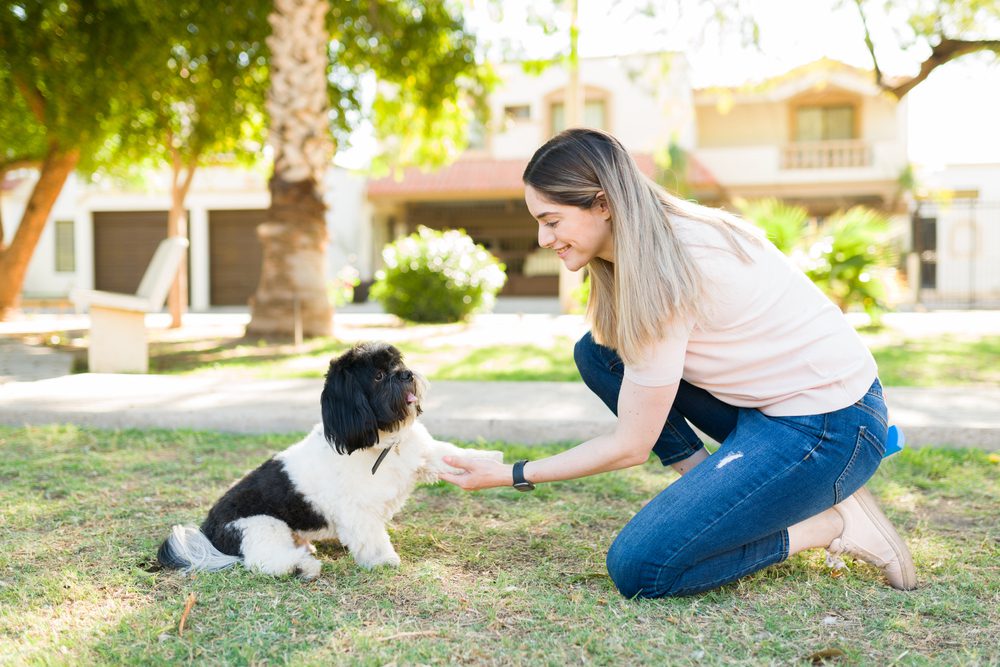
House Training and Crate Training
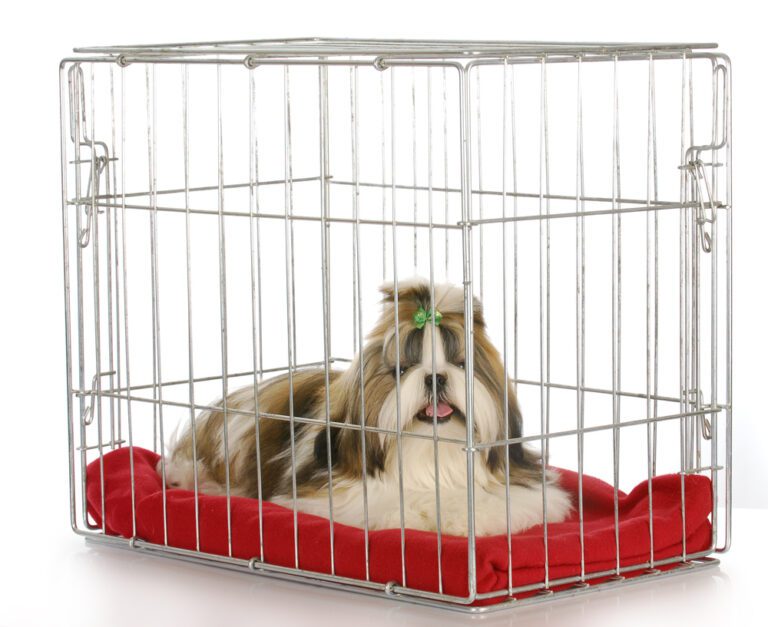
House training is often the first big project with a Shih Tzu puppy. Our step-by-step potty training guide and crate training guide cover schedules, crate size, and handling accidents.
Common Training Challenges
- Barking. See our barking guide.
- Being left alone. See our anxiety guide.
- Nipping, jumping, and other habits. See our behavior problems guide.
- Chewing. See our chew toy guide.
When to get help: If your dog shows growling, snapping, biting, or intense fear, talk to your vet first to rule out pain, then consider a qualified trainer who uses reward-based methods or a veterinary behaviorist. Avoid anyone who recommends choke chains, prong collars, shock collars, or physical punishment.

Frequently Asked Questions
Are Shih Tzus easy to train?
Shih Tzus are people-focused and respond well to gentle, reward-based training. Short, consistent sessions work best. House training may take patience, as with many small breeds.
What is the best way to train a Shih Tzu?
Use reward-based training. The American Veterinary Society of Animal Behavior recommends positive reinforcement for all dogs and warns that punishment-based methods can increase fear and aggression.
When should I start training my Shih Tzu puppy?
Start the day your puppy comes home. AVSAB notes that puppies can join socialization classes as early as 7 to 8 weeks, after their first vaccines and deworming.
What should I teach my Shih Tzu first?
Start with name response, sit, come, and house training. Then add down, stay, leave it, and loose-leash walking.
Should I use punishment to train my Shih Tzu?
No. AVSAB states there is no evidence that aversive training is necessary and that it can damage the bond between you and your dog.
Sources
- American Veterinary Society of Animal Behavior: Position statement on humane dog training (2021)
- American Veterinary Society of Animal Behavior: Position statement on puppy socialization
- Amazon.com product listings, checked September 2026
This article is for general information. It is not a substitute for advice from your veterinarian. Read our medical disclaimer.