
Shih Tzu Breathing Problems: Snoring, Panting, Heatstroke, and When to Worry
Part of our guide: Shih Tzu health issues
Quick answer: Shih Tzu breathing problems come from their flat face: narrow nostrils and a long soft palate can narrow the airway, a condition called brachycephalic obstructive airway syndrome (BOAS). Snoring is common, but loud breathing at rest, gasping, blue gums or collapse need a vet. Keep your Shih Tzu lean, use a harness and avoid heat and hard exercise.
On this page
How we researched this article: This guide is based on Cornell University’s College of Veterinary Medicine, VCA Animal Hospitals, a 2026 review in Today’s Veterinary Practice, and heatstroke research from the Royal Veterinary College and Nottingham Trent University covering more than 900,000 dogs. Every source is listed at the end. Last reviewed: November 2026.
This is an emergency. Go to a vet now if your Shih Tzu: is struggling to breathe, has blue, grey, or very pale gums, collapses or faints, or shows signs of heatstroke such as heavy panting that will not settle, thick drool, vomiting, wobbliness, or confusion. For suspected heatstroke, move your dog to shade or air conditioning and start cooling it with cool, not ice-cold, water while you call the vet.
The Short Answer
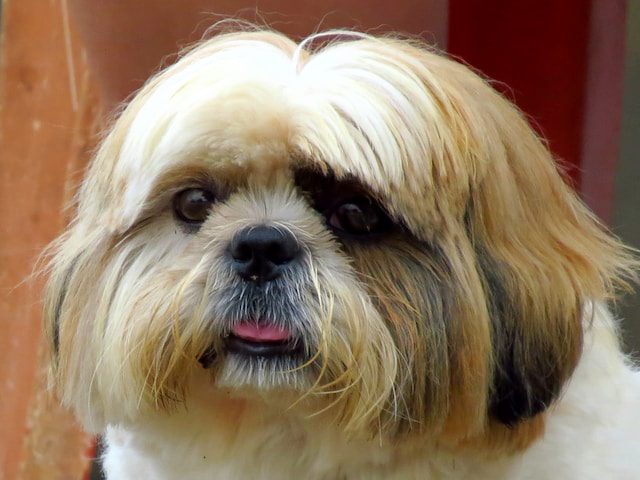
Shih Tzus are a flat-faced (brachycephalic) breed. Their skulls are shortened, but the soft tissues of the nose and throat are not reduced to match. That can narrow the airway and make breathing harder, a condition vets call brachycephalic obstructive airway syndrome (BOAS).
Cornell University lists the Shih Tzu among the breeds affected by BOAS. Many Shih Tzus breathe well, but it is important to know the signs, because breathing trouble can get worse with heat, exercise, stress, and extra weight.

What Causes Breathing Problems in Shih Tzus?
A 2026 veterinary review describes several parts of BOAS:
- Narrow nostrils (stenotic nares). The nostril openings are pinched, so less air gets through.
- A long, thick soft palate. The soft part of the roof of the mouth hangs into the airway.
- A narrow windpipe. Some flat-faced dogs have a smaller-than-normal trachea.
- Changes in the voice box (larynx). Over time, the extra effort of breathing can cause the larynx to weaken or collapse. Laryngeal collapse is common in Shih Tzus that have BOAS.
Signs to Watch For
- Loud snoring or snorting, especially when awake
- Noisy breathing at rest
- Tiring quickly on walks or needing to stop often
- Gagging, retching, or bringing up food or foam
- Trouble sleeping, or sleeping sitting up or with the chin raised
- Fainting or collapsing, especially in heat or excitement
Some snorting is common in the breed. But noisy breathing at rest, or breathing that is getting worse, should be checked by your vet.
Panting and Heatstroke
Dogs pant to cool down. Flat-faced dogs do this poorly. In a study published in Scientific Reports, researchers from Nottingham Trent University and the Royal Veterinary College found that flat-faced dogs as a group had about twice the odds of heatstroke (2.10 times) compared with medium-faced dogs. In the same study, Shih Tzus themselves had lower odds than Labradors (not a statistically clear difference), and the authors noted the Shih Tzu, Lhasa Apso and Chihuahua had the lowest odds despite being flat-faced, probably thanks to their small size. Shih Tzus can still overheat, so the precautions below still apply.
A related study of 905,543 dogs found that most heatstroke cases, 74%, were triggered by exercise, not by being left in a hot car. Other triggers included hot, humid weather, visits to the groomer or vet, and being trapped under blankets.
That matters in Canada and the northern US, where summer days can be hot and very humid.
How to keep your Shih Tzu safe in the heat
- Walk early in the morning or late in the evening on hot days.
- Keep walks short and slow in heat and humidity.
- Always bring water and find shade.
- Keep your dog in air conditioning during heat waves.
- Never leave your dog in a parked car, even for a few minutes.
- Watch closely after grooming or vet visits on warm days.
Bring water and keep walks short on hot, humid days.
How to Help Your Shih Tzu Breathe Easier
- Keep your dog lean. VCA notes that obesity worsens the signs of BOAS. See our healthy weight guide.
- Use a harness instead of a collar, so there is no pressure on the throat.
- Avoid overexertion, especially in heat.
- Keep your dog calm during stressful events, which can make breathing harder.
- Ask your vet about your dog’s airway at every checkup.

Treatment Options
Your vet can often see narrow nostrils during a regular exam. Checking the soft palate and larynx needs sedation or anesthesia. VCA notes that flat-faced dogs have a higher risk with anesthesia, so vets usually do blood work and chest X-rays first. If surgery is needed, it is often done during the same anesthesia.
Surgery can widen the nostrils and shorten a long soft palate. Cornell notes that narrow nostrils can be treated by removing a small wedge of tissue to make the openings larger. A 2026 veterinary review notes that early intervention and keeping a healthy body weight may help.
Ask your vet to check your Shih Tzu’s breathing at every visit.
Related: sneezing, reverse sneezing, and coughing and eye problems in flat-faced dogs.
Frequently asked questions
Why does my Shih Tzu breathe so loudly?
Shih Tzus are a flat-faced breed, and many have narrow nostrils or a long soft palate that make breathing noisier. Loud breathing at rest or breathing that is getting worse should be checked by a vet.
Is it normal for a Shih Tzu to snore?
Many Shih Tzus snore. Very loud snoring, gasping, or needing to sleep sitting up can be signs of an airway problem.
Why is my Shih Tzu panting so much?
Panting is normal after exercise, in heat, or when excited. Heavy panting that will not settle, especially in warm weather, can be a sign of heatstroke and needs urgent care.
Are Shih Tzus at risk of heatstroke?
They can. Flat-faced dogs as a group had about twice the odds of heatstroke in a large UK study, though Shih Tzus did better than many flat-faced breeds. Most cases are triggered by exercise in warm weather.
Can breathing problems in Shih Tzus be fixed?
Surgery can widen narrow nostrils and shorten a long soft palate. Keeping your dog at a healthy weight also helps.
Sources
- Cornell University College of Veterinary Medicine. Brachycephalic Obstructive Airway Syndrome (BOAS).
- VCA Animal Hospitals. Brachycephalic Airway Syndrome in Dogs.
- Today’s Veterinary Practice. An Overview of Brachycephalic Obstructive Airway Syndrome. 2026.
- Science for Animal Welfare. Shih Tzu: Brachycephalic Airway Obstruction Syndrome. 2026.
- Hall EJ, Carter AJ, O’Neill DG. Dogs do not die just in hot cars: exertional heat-related illness is a greater threat to UK dogs. Animals, 2020.
- Hall EJ, Carter AJ, O’Neill DG. Incidence and risk factors for heat-related illness (heatstroke) in UK dogs under primary veterinary care in 2016. Scientific Reports, 2020.
- BBC Science Focus. Flat-faced dogs twice as likely to suffer with heatstroke.
This article is for general information. It is not a substitute for advice from your veterinarian. Read our medical disclaimer.