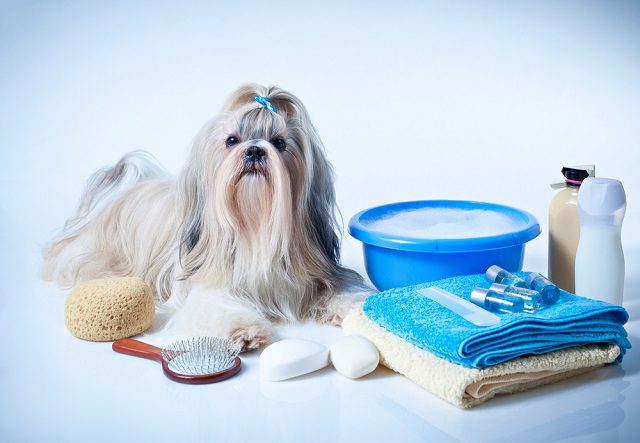

Why Is My Shih Tzu Vomiting? Yellow Foam, White Foam, and When to Call a Vet
How we researched this article: This guide is based on VCA Animal Hospitals, the Cummings School of Veterinary Medicine at Tufts University, the American Kennel Club, the ASPCA Animal Poison Control Center, and a 2024 Royal Veterinary College study of more than 11,000 Shih Tzus. Every source is listed at the end. Last reviewed: September 2026.
Call a vet or emergency clinic now if your Shih Tzu: vomits several times in a row, vomits blood or material that looks like coffee grounds, retches without bringing anything up, has a swollen or painful belly, seems weak or collapses, may have eaten a toxin or a toy, or is a young puppy who cannot keep water down.
Seeing your Shih Tzu throw up is scary. Most single episodes pass on their own. Some vomiting, however, is a sign of a serious problem. This guide explains what different kinds of vomit can mean, what causes it, what to do at home, and when to call your veterinarian.
It combines our earlier articles on yellow foam, white foam, and general vomiting into one updated guide.
Vomiting or Regurgitation? Know the Difference
VCA Animal Hospitals explains that these two things look alike but are not the same.
- Vomiting is active. Your dog heaves, and the belly pushes hard. Many dogs drool, lick their lips, or pace first.
- Regurgitation is passive. Food or water slides back up with little effort, often right after eating or drinking. The food usually looks undigested and may be tube shaped.
The difference matters because the causes are different. Tell your vet which one you saw. A short phone video can help a lot.
Flat-faced breeds deserve special attention here. A 2005 study of 73 brachycephalic dogs with airway disease found that digestive tract problems, including regurgitation and vomiting, were common in these dogs. If your Shih Tzu also snores loudly or struggles to breathe, read our guide to Shih Tzu breathing problems and mention both issues to your vet.

What the Color and Look of the Vomit Can Tell You
Yellow foam or yellow liquid
Yellow color usually comes from bile, a digestive fluid made by the liver. Bile can collect in an empty stomach and irritate it. Dogs that vomit yellow foam early in the morning, before breakfast, may have a condition called bilious vomiting syndrome. See the next section.
White foam
White foam is usually stomach fluid mixed with air. It can follow an empty stomach, eating too fast, or mild stomach irritation. Coughing and gagging can also bring up white froth, so a dog that seems to be vomiting may actually have a throat or airway problem. Our guide to reverse sneezing and coughing in Shih Tzus can help you tell these apart.
Undigested food
Food that comes back up soon after a meal, with little effort, may be regurgitation. It can also happen when a dog eats too fast.
Grass
Many dogs eat grass. It does not always mean they feel sick. Grass that has been treated with lawn chemicals is a concern, so keep your dog off treated lawns.
Blood, dark specks, or a bad smell
Red streaks, dark material that looks like coffee grounds, or vomit that smells like stool are warning signs. Call your vet right away.
Yellow Foam in the Morning: Bilious Vomiting Syndrome
Bilious vomiting syndrome, or BVS, happens when bile flows back into an empty stomach. The American Kennel Club and the Tufts University pet nutrition team describe the typical pattern:
- The dog vomits yellow fluid or foam, usually early in the morning.
- The vomiting happens on an empty stomach, often after a long gap between dinner and breakfast.
- The dog otherwise seems healthy, with a normal appetite and energy.
- Some dogs lick their lips or seem less interested in food first thing in the morning.
There is no single test for BVS. Vets diagnose it by ruling out other causes with an exam, blood work, and sometimes imaging.
The most common fix is a feeding change. Your vet may suggest a small snack late in the evening, or splitting the daily food into more frequent, smaller meals. The total amount of food for the day should stay the same so your dog does not gain weight. If feeding changes do not help, vets may prescribe a special diet or medicine.
Do not assume it is BVS. Yellow vomit can also come with pancreatitis, liver disease, a blockage, or other illness. If your dog seems tired, stops eating, has diarrhea, or vomits at other times of day, see your vet.
Common Causes of Vomiting in Shih Tzus
VCA Animal Hospitals lists many possible causes. Some are minor. Others are serious.
- Eating something they should not. Garbage, table scraps, fatty food, and spoiled food are frequent causes.
- A sudden diet change. Switching foods too quickly can upset the stomach.
- Eating too fast. Gulping food and air can bring it back up.
- Toxins. Some human foods, medicines, plants, and household products are poisonous to dogs.
- Swallowed objects. Toy pieces, socks, and bones can cause a blockage. This is an emergency.
- Infections and parasites. Viruses, bacteria, and worms can all cause vomiting. Puppies are at higher risk.
- Pancreatitis. Inflammation of the pancreas is often linked to fatty meals.
- Other illness. Kidney disease, liver disease, inflammatory bowel disease, and cancer can all cause vomiting.
- Stress and motion sickness. Car rides and big changes can upset some dogs. See our guide to Shih Tzu anxiety.
Digestive disease is a real concern in this breed. A 2024 Royal Veterinary College study of UK Shih Tzus under veterinary care found that enteropathy, meaning disease of the digestive tract that causes signs such as diarrhea and vomiting, affected 10.5 percent of the dogs studied. It was also recorded as the cause in 7.9 percent of deaths.
Think your dog ate something toxic? Call your vet, an emergency clinic, the ASPCA Animal Poison Control Center at (888) 426-4435, or the Pet Poison Helpline at (855) 764-7661. The Pet Poison Helpline serves both the United States and Canada. Both hotlines may charge a fee. Do not try to make your dog vomit unless a veterinarian tells you to. Common dangers include xylitol (a sweetener in some gum and peanut butter), grapes and raisins, chocolate, onions, garlic, and human pain medicines. See our guide to human foods Shih Tzus can and cannot eat.
When to Call Your Vet
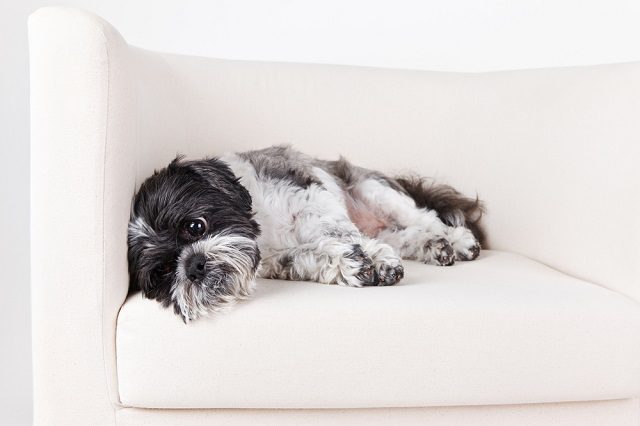
VCA advises calling a vet if vomiting lasts more than one to two days, or sooner if other signs appear. Shih Tzus are small, and small dogs can become dehydrated quickly. Puppies are at even greater risk. It is reasonable to call sooner rather than later.
Call your vet the same day if your Shih Tzu:
- vomits more than once or twice in a day
- also has diarrhea, especially if it is bloody or black
- will not eat, or cannot keep water down
- seems tired, weak, or hides
- has a fever, a tender belly, or pale gums
- is a puppy, a senior, or has a health condition such as diabetes or kidney disease
- vomits on and off for more than a few days, even if they seem fine
What to Do at Home (With Your Vet’s Approval)
If your vet agrees that your dog can be watched at home, these steps may help.
- Keep water available. Offer small amounts of fresh water often. Large gulps can trigger more vomiting.
- Do not use long fasts. Older articles, including earlier versions of this one, suggested withholding food for 12 to 24 hours. VCA now notes that the gut needs nutrients while it recovers, and that withholding food can do more harm. Long fasts are also risky for tiny dogs and puppies, which can develop low blood sugar. Ask your vet how long, if at all, to wait before feeding.
- Feed small, easy meals. VCA recommends a veterinary gastrointestinal diet over the old boiled chicken and rice mix, which lacks many essential nutrients. Offer smaller portions four or more times a day during recovery.
- Return to normal food slowly. Mix the regular food back in over a few days.
- Do not give human medicines. Products such as bismuth subsalicylate and anti-diarrhea pills can be harmful to dogs or hide a serious problem. Only give medicine your vet prescribes.
What Your Vet May Do
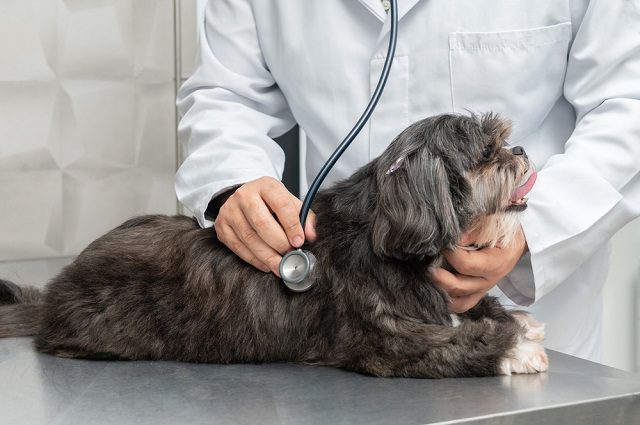
Your vet will ask about what your dog ate, when the vomiting started, and what it looked like. They will examine your dog and may recommend blood work, a fecal test, X-rays, or an ultrasound.
Treatment depends on the cause. VCA lists anti-nausea medicine such as maropitant, antacids such as famotidine, and fluids for dehydration as common options. A blockage may need surgery.
How to Help Prevent Vomiting
- Feed a complete, balanced diet at regular times.
- Change foods gradually over about a week.
- Use a slow-feeder bowl if your dog gulps food.
- Keep trash, toxic foods, and medicines out of reach.
- Pick up small toys and socks that could be swallowed.
- Keep parasite prevention up to date.
- Limit fatty treats and table scraps.
- Keep your dog at a healthy weight. See our Shih Tzu weight guide.
Vomiting often goes with changes in the stool. Our guide to Shih Tzu poop, constipation, and anal glands explains what is normal and what is not.
Frequently Asked Questions
Why is my Shih Tzu throwing up yellow foam?
Yellow foam is usually bile. It often appears when the stomach is empty, such as early in the morning. A late-evening snack or more frequent meals may help, but see your vet if it keeps happening or your dog seems unwell.
Why is my Shih Tzu vomiting white foam?
White foam is usually stomach fluid mixed with air. It can follow an empty stomach or eating too fast. Coughing can also bring up white froth. Repeated foam, or foam with retching and no result, needs a vet visit.
Should I stop feeding my Shih Tzu after vomiting?
Long fasts are no longer recommended. VCA notes the gut needs nutrients to recover, and tiny dogs can develop low blood sugar. Ask your vet when and what to feed.
Can I give my Shih Tzu Pepto-Bismol?
Do not give human medicines unless your vet tells you to. Some can harm dogs or hide a serious problem.
When is vomiting an emergency?
Go to a vet now if your dog vomits many times, vomits blood, retches without result, has a swollen belly, seems weak, or may have eaten a toxin or an object.
Sources
- VCA Animal Hospitals. Vomiting in Dogs.
- VCA Animal Hospitals. Bland Diet Instructions for Dogs and Cats.
- Linder DE, Hanford R. Stomaching the Problem: Could Your Pet Have Bilious Vomiting Syndrome? Petfoodology, Cummings School of Veterinary Medicine at Tufts University, 2021.
- American Kennel Club. Bilious Vomiting Syndrome in Dogs. 2024.
- Dale F, Brodbelt DC, West G, Church DB, Lee YH, O’Neill DG. Demography, common disorders and mortality of Shih Tzu dogs under primary veterinary care in the UK. Canine Medicine and Genetics, 2024;11:2.
- Poncet CM, et al. Prevalence of gastrointestinal tract lesions in 73 brachycephalic dogs with upper respiratory syndrome. Journal of Small Animal Practice, 2005.
- ASPCA. Animal Poison Control Center.
- Pet Poison Helpline. Pet Poison Helpline.
This article is for general information. It is not a substitute for advice from your veterinarian. Read our medical disclaimer.