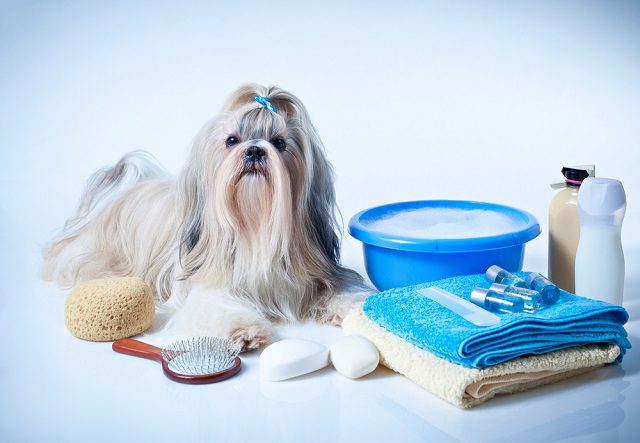
Why Is My Shih Tzu Shedding? Shedding, Hair Loss, and Allergy Facts
How we researched this article: This guide uses the Merck Veterinary Manual, PetMD, the American Kennel Club breed standard, and a peer-reviewed allergy study published in the Journal of Allergy and Clinical Immunology. Every source is listed at the end. Last reviewed: September 2026.
The Short Answer
Yes, Shih Tzus shed, but usually not much that you notice. Like every dog, they lose old hairs as part of a normal growth cycle. Much of that loose hair gets caught in the long coat instead of landing on your floor. That trapped hair is one reason Shih Tzus mat if they are not brushed.
Hair loss is different from shedding. PetMD explains that normal shedding is part of the hair follicle life cycle, while hair loss (alopecia) means bald spots or thinning skin caused by a problem with the hair follicle. Bald patches, thinning, or hair loss with itching need a vet visit.
Are Shih Tzus Hypoallergenic?
No. No dog breed is truly hypoallergenic, including the Shih Tzu.
A study published in the Journal of Allergy and Clinical Immunology measured Can f 1, the main dog allergen, in the coats and homes of different breeds. Breeds marketed as hypoallergenic actually had higher allergen levels in their coats. The authors concluded there was no evidence to describe any breed as hypoallergenic. The journal’s editorial on the study called hypoallergenic dogs a myth.
Dog allergens come from skin flakes (dander), saliva, and urine, not just hair. A low-shedding dog still makes allergens.
If someone in your home has dog allergies
- Talk to an allergist before bringing a dog home.
- Spend time with the specific dog first. People can react differently to individual dogs.
- Keep the dog out of the bedroom and wash bedding often.
- Use a vacuum with a HEPA filter, and consider an air purifier.
When Hair Loss Is Not Normal
See your vet if you notice:
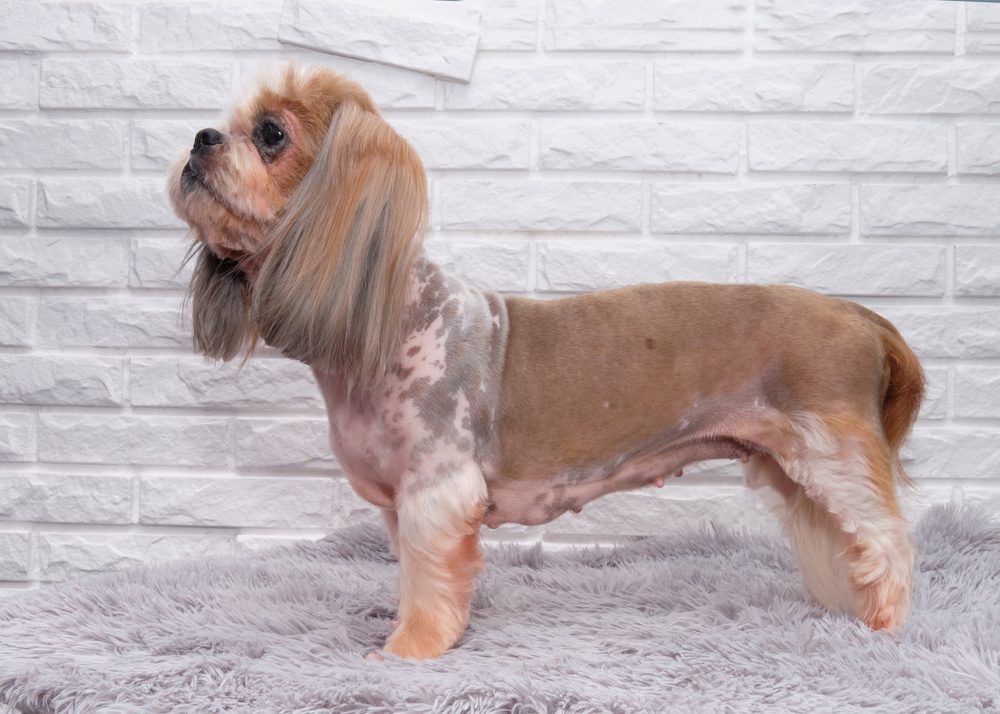
- Bald or thin patches
- Red, scaly, crusty, or darkened skin
- Hair loss with itching, licking, or chewing
- Hair loss on both sides of the body in a matching pattern
- A dull, dry, or brittle coat along with weight gain, low energy, or increased thirst
Common Causes of Hair Loss
The Merck Veterinary Manual and PetMD list these common causes:
- Parasites. Fleas and mange mites can cause itching and hair loss.
- Allergies. Flea, environmental, and food allergies lead to scratching and chewing, which can thin the coat. See our itchy skin guide.
- Infections. Bacterial skin infections and ringworm, a fungal infection, can cause patchy hair loss. Ringworm is contagious to other pets and to people.
- Hormone problems. Merck notes that hormonal imbalances such as hypothyroidism can slow hair growth. Cushing’s disease is another hormonal cause, more common in middle-aged and older dogs.
- Nutrition. Merck notes that nutritional deficiencies, especially protein deficiency, can slow hair growth.
- Friction. A tight or rubbing collar or harness can wear away hair in one spot.
- Temporary hair loss. Merck notes that hair loss can happen during pregnancy and nursing, or several weeks after a serious illness or fever.
How Your Vet Finds the Cause
According to Merck, your vet will look at the pattern of hair loss and check whether hairs are falling out or breaking off. Common tests include combing for fleas and lice, skin scrapings for mites, and skin samples or cultures to check for bacteria, yeast, or ringworm. Blood tests can check for hormone problems. If the cause is still unclear, a small skin biopsy may be needed.
Will My Shih Tzu’s Hair Grow Back?
In most cases, yes, once the cause is treated. Hair loss from fleas, allergies, and infections usually grows back after the problem is under control. Hair may not regrow fully over deep wounds or scars.
Regular pet trims, like a short puppy cut, normally grow back. A condition called post-clipping alopecia, where shaved hair is slow to return, is mostly seen in thick-coated breeds such as Siberian Huskies.
How to Keep Shedding Under Control
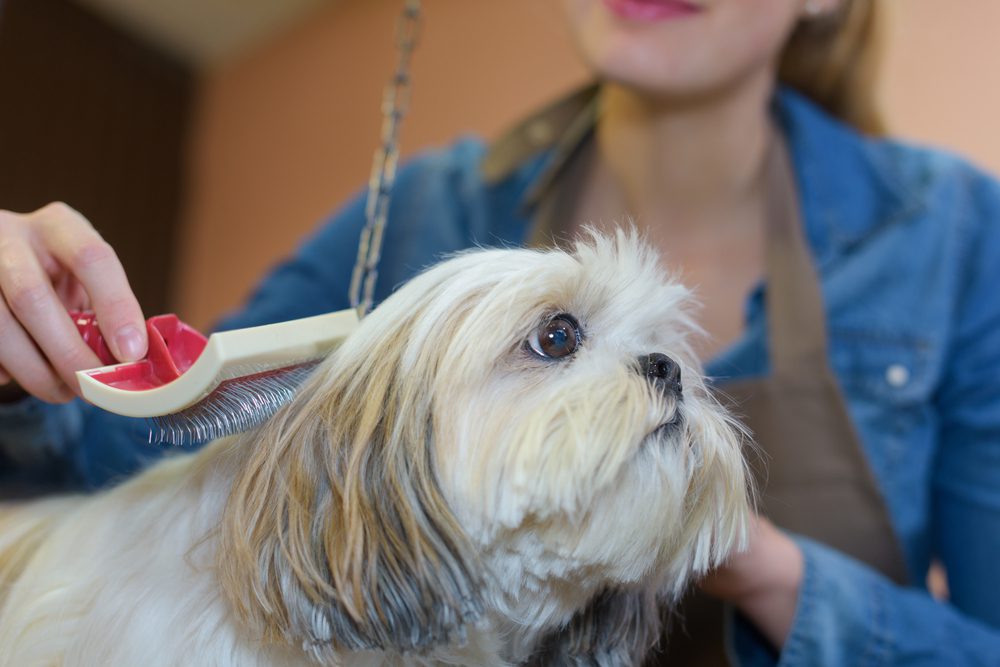
- Brush all the way to the skin several times a week, or daily for a long coat. This removes loose hair and prevents mats.
- Bathe with a gentle dog shampoo and dry the coat fully.
- Feed a complete and balanced dog food.
- Keep up with flea prevention.
- Consider a shorter trim if long-coat care is hard to keep up with.
Learn more in our guide to Shih Tzu coat types and coat care.
Safety first: Heavy shedding, bald patches, red or scaly skin, constant scratching or a bad smell are not normal coat changes. They can signal allergies, parasites, infection or a hormone problem. See your vet before you try home remedies or supplements.
Frequently Asked Questions
Do Shih Tzus shed a lot?
No. Shih Tzus shed lightly, and much of the loose hair stays in the coat. Regular brushing removes it before it forms mats.
Are Shih Tzus hypoallergenic?
No. No breed is truly hypoallergenic. A study in the Journal of Allergy and Clinical Immunology found no evidence to support calling any breed hypoallergenic.
Why is my Shih Tzu losing hair in patches?
Common causes include fleas, mites, allergies, skin infections, ringworm, and hormone problems. Patchy hair loss should be checked by a vet.
Do Shih Tzus molt or have a shedding season?
Shih Tzus lose hair gradually rather than in heavy seasonal sheds. Loose hair tends to collect in the coat instead of falling out.
Will my Shih Tzu’s hair grow back after a haircut?
Yes. Normal pet trims grow back. Slow regrowth after shaving is mostly seen in thick-coated breeds.
Sources
- Merck Veterinary Manual. Hair Loss (Alopecia) in Dogs. 2025.
- PetMD. Hair Loss in Dogs: Causes, Symptoms, and Treatment. 2025.
- Vredegoor DW, et al. Can f 1 levels in hair and homes of different dog breeds: lack of evidence to describe any dog breed as hypoallergenic. Journal of Allergy and Clinical Immunology, 2012.
- Lockey RF. The myth of hypoallergenic dogs (and cats). Journal of Allergy and Clinical Immunology, 2012.
- WebMD. Dog Bald Spots and Hair Loss. 2025.
This article is for general information. It is not a substitute for advice from your veterinarian. Read our medical disclaimer.