Potty Training a Shih Tzu 2026: The Complete House Training Guide
Last Updated: March 23, 2026 | Written by Shahzad Sadiq & the Shih Tzu Pedia Team — Shih Tzu Specialists
Quick Answer: Potty training a Shih Tzu takes 2 to 4 months with consistent effort. Start at 8 weeks old, take your puppy out every 2–3 hours, always use positive reinforcement, and clean accidents immediately with an enzymatic cleaner. Patience is non-negotiable — Shih Tzus are notoriously one of the more challenging breeds to housebreak.
Are Shih Tzus Hard to Potty Train?
Here’s a truth no breeder’s website will put in the headline: Shih Tzus are considered one of the more challenging small breeds to housebreak.
Multiple veterinarians and experienced Shih Tzu owners confirm this. According to the American Shih Tzu Club, spending several weeks or even months getting your dog 100% reliable on housetraining is completely normal for this breed. One experienced owner on a popular dog forum described her male Shih Tzu’s training as taking a full year before accidents became rare — even with daily, dedicated effort.
Why the difficulty? A few reasons specific to the breed:
- Stubborn independence. Shih Tzus were bred as companion dogs for Chinese royalty. They’re charming, confident, and not inherently motivated to please the way working breeds like Labradors are.
- Small bladder, high frequency. Their tiny bodies mean they need to go — often. Miss a window, and you’ll have an accident.
- Sensitivity to correction. Harsh scolding doesn’t just fail with Shih Tzus — it actively backfires, teaching them to hide their accidents rather than stop having them.
- Distraction in new environments. Shih Tzus can be so easily stimulated outdoors that they forget why they went out there in the first place.
None of this means housebreaking is impossible. Far from it. Every Shih Tzu is fully capable of becoming reliably housetrained — the timeline simply requires your patience and consistency more than your puppy’s cooperation.
Set the right expectations now, and the process becomes manageable. Expect overnight success, and you’ll end up frustrated.
When to Start Potty Training a Shih Tzu
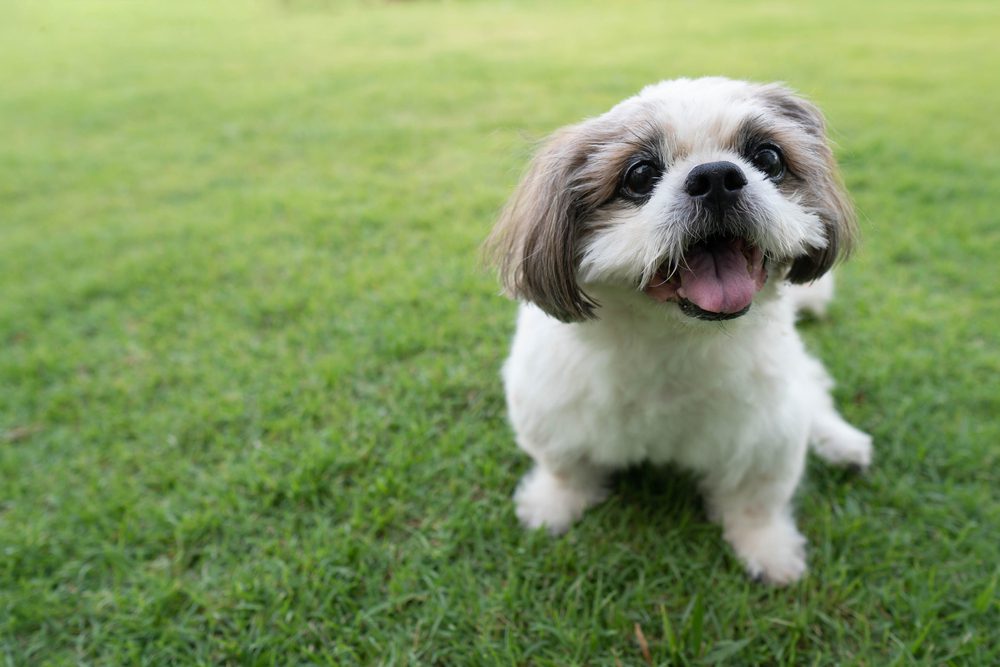
Start the day your Shih Tzu comes home.
According to the American Shih Tzu Club and multiple training sources, puppies as young as 8 weeks old are ready to begin learning potty habits. While their bladder control is still developing, establishing routines early means you’re building good habits from the foundation up — rather than retraining bad ones later.
One critical caveat: most veterinarians recommend that puppies complete their vaccination series (typically around 12–16 weeks) before being brought to public outdoor areas. For a new 8-week-old puppy, limit outdoor bathroom trips to your own private yard or a space that unvaccinated dogs haven’t frequented. Always confirm the appropriate timing with your vet.
The Bladder Control Rule
A widely cited veterinary guideline states that puppies can hold their bladder approximately one hour for every month of age — up to a maximum of about 8 hours for adult dogs. That means:
| Age | Maximum Hold Time |
|---|---|
| 8 weeks (2 months) | ~2 hours |
| 12 weeks (3 months) | ~3 hours |
| 4 months | ~4 hours |
| 6 months | ~5–6 hours |
| Adult | Up to 8 hours (though less is ideal) |
Use this table as your scheduling backbone. Going longer than these windows is a setup for accidents — not stubbornness.
What You’ll Need Before You Begin
Gather these supplies before your puppy comes home. Training effectiveness drops significantly when you’re scrambling for equipment mid-session.
Essentials:
- Enzymatic cleaner — standard soap and water don’t remove urine odor at the molecular level; your Shih Tzu’s nose can still detect residue that signals “bathroom here.”
- High-value training treats — small, soft, easy to chew quickly (not their regular kibble)
- Harness and 6-foot leash — for controlled outdoor trips during training
- Indoor playpen or exercise pen — for supervised confinement when you can’t watch them
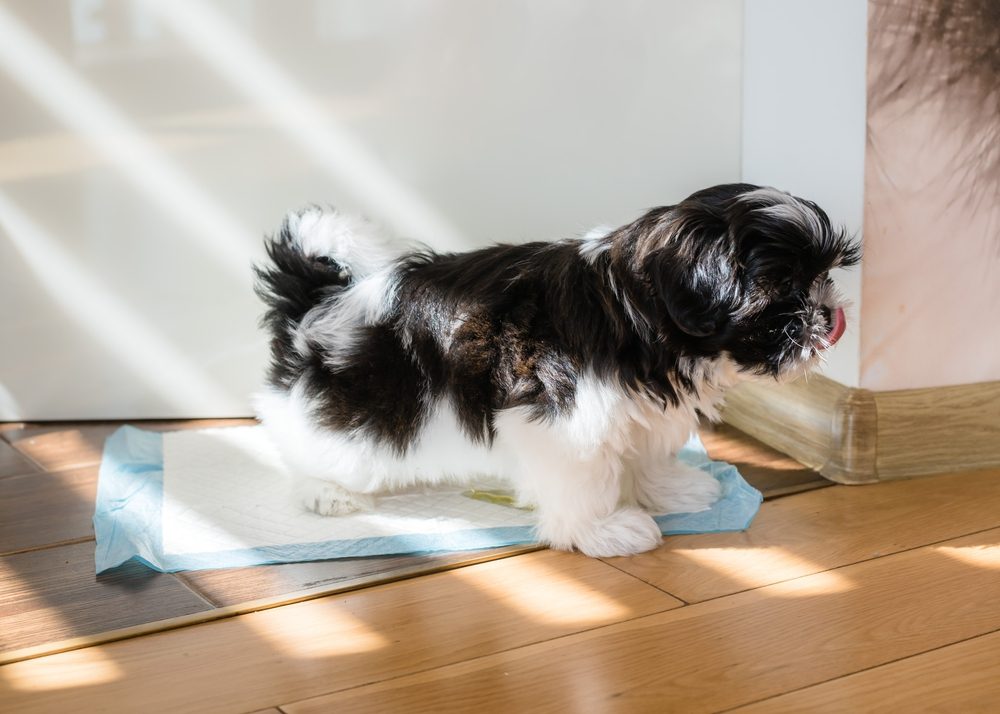
- Pee pads — useful as a secondary option during inclement weather or for apartment living
- Treat pouch or zip bag near the exit door — so you can reward instantly upon successful elimination
Optional but helpful:
- Doorbell or potty bell — some owners successfully teach Shih Tzus to ring a bell when they need to go out
- GPS tracker for the yard — if you have a large yard, keeping tabs on where your puppy goes helps confirm success before rewarding
- Baby gates — to limit your puppy’s unsupervised access to the house during training
Step-by-Step Potty Training Method
This method is based on techniques endorsed by the American Shih Tzu Club and widely recommended by professional dog trainers.
Step 1: Choose Your Designated Potty Spot
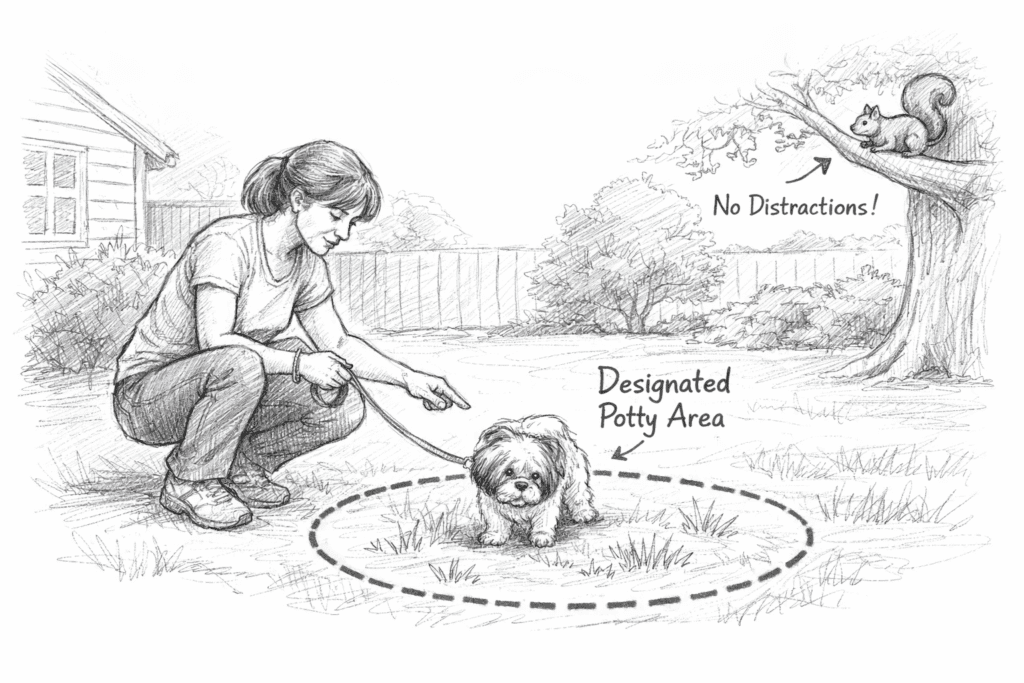
Pick one specific area — ideally 8 to 10 feet in diameter — and take your Shih Tzu to that exact location every single time. The consistency of smell and location builds a powerful environmental cue.
Don’t let your puppy freely roam the yard. A squirrel, a leaf, or a blade of grass becomes infinitely more interesting than the task at hand. Keep them leashed and focused.
Step 2: Establish a Cue Word
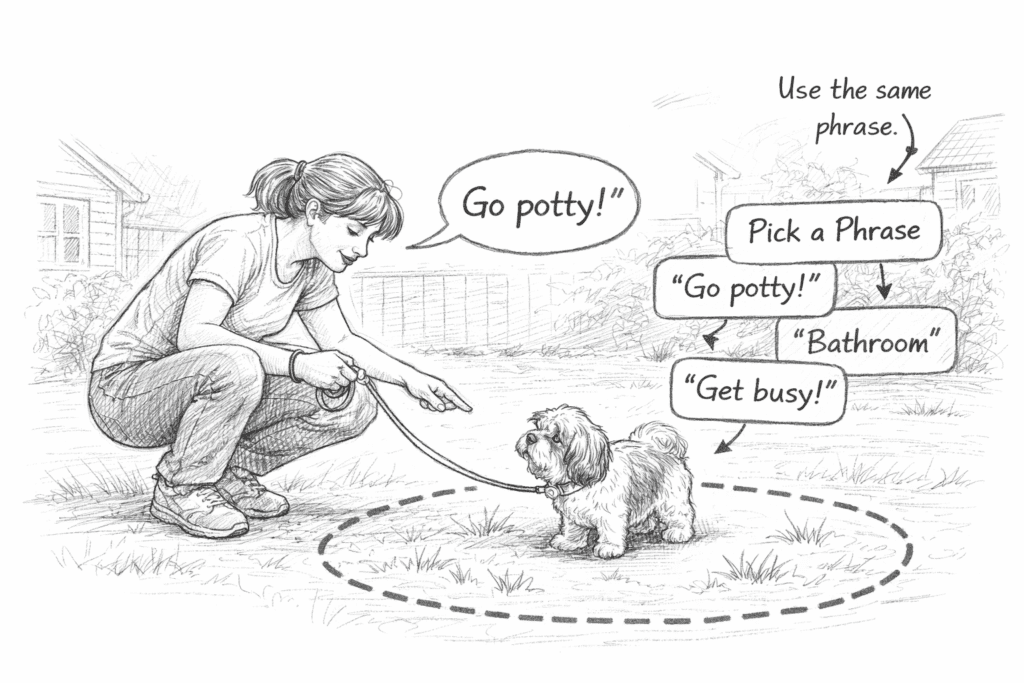
Pick a phrase — “go potty,” “get busy,” or “bathroom” — and use it consistently the moment you reach the designated spot. Use the same phrase every time, and make sure everyone in your household does too. Dogs learn verbal patterns through repetition, and a consistent cue accelerates the association dramatically.
Step 3: Go Out on a Leash — Every Time
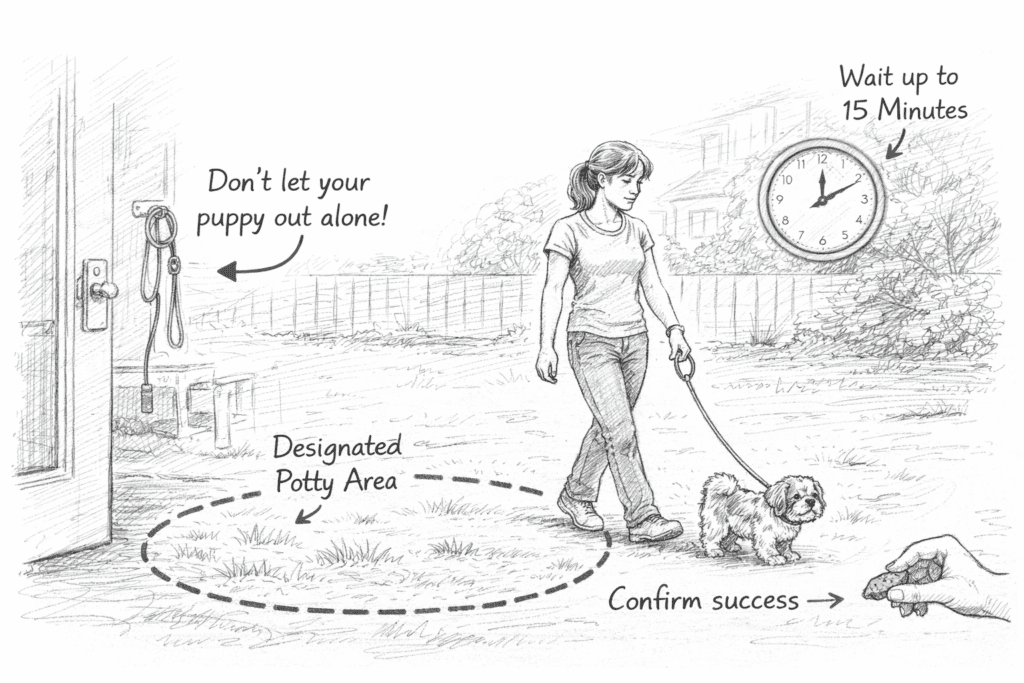
Don’t simply open the back door and let your puppy out. You won’t know if they actually went. You won’t be able to reward the right behavior at the right moment. Leash them up, walk to the spot, wait patiently (up to 15 minutes), and stay present.
Step 4: Reward Within Seconds of Success
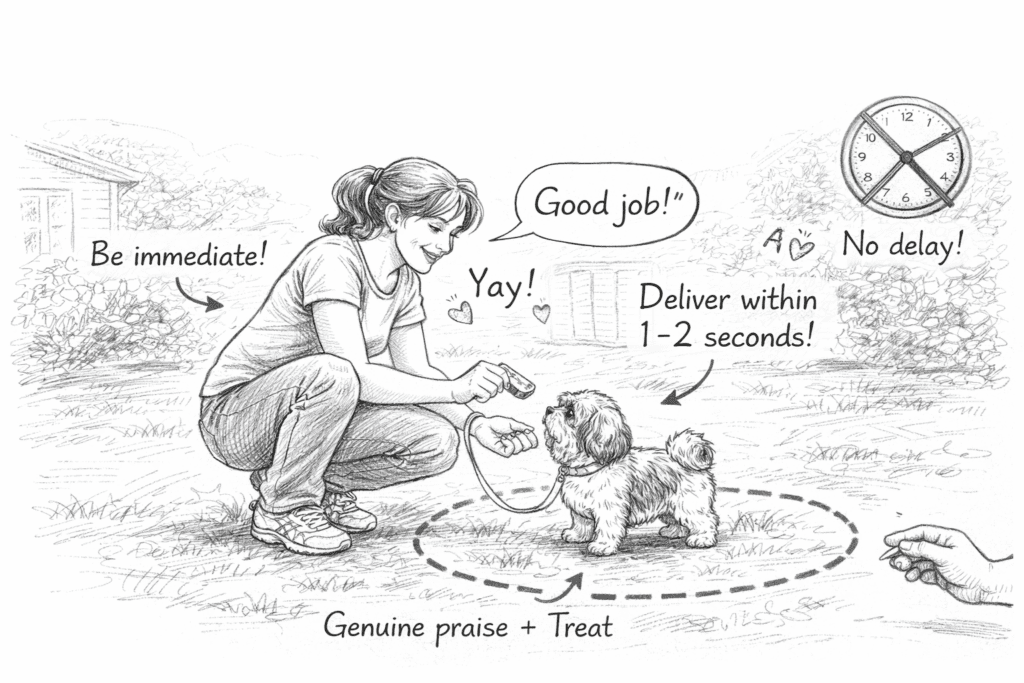
The moment your Shih Tzu finishes eliminating — not when they come back inside, not after you put away the leash — deliver praise and a treat immediately. Dogs connect rewards to whatever they were just doing. A 30-second delay breaks that connection entirely.
Make this reward genuinely exciting. Calm, neutral praise won’t cut it for a breed as personality-driven as the Shih Tzu. Match their energy with real enthusiasm.
Step 5: If They Don’t Go, Try Again in 15 Minutes
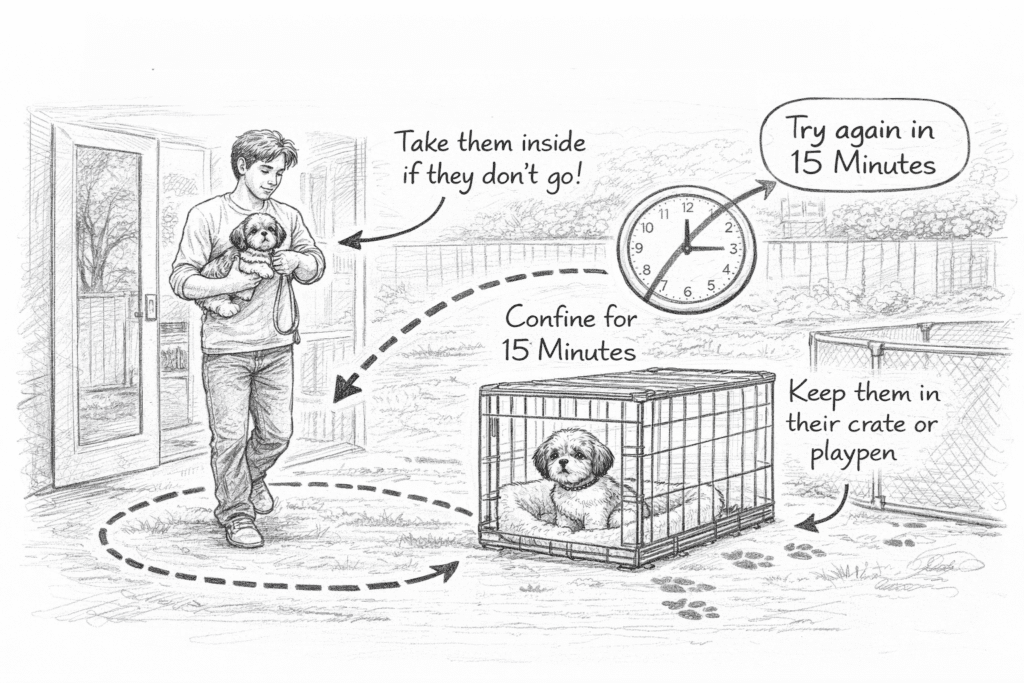
If your Shih Tzu sniffs around the spot but doesn’t eliminate within 15 minutes, calmly bring them back inside and confine them to their crate or playpen for 15 minutes. Then try again. Repeat until success.
This technique, endorsed by the American Shih Tzu Club, prevents free indoor roaming before elimination is confirmed, which is the most common source of accidents.
Step 6: Supervise or Confine — There Is No Middle Ground
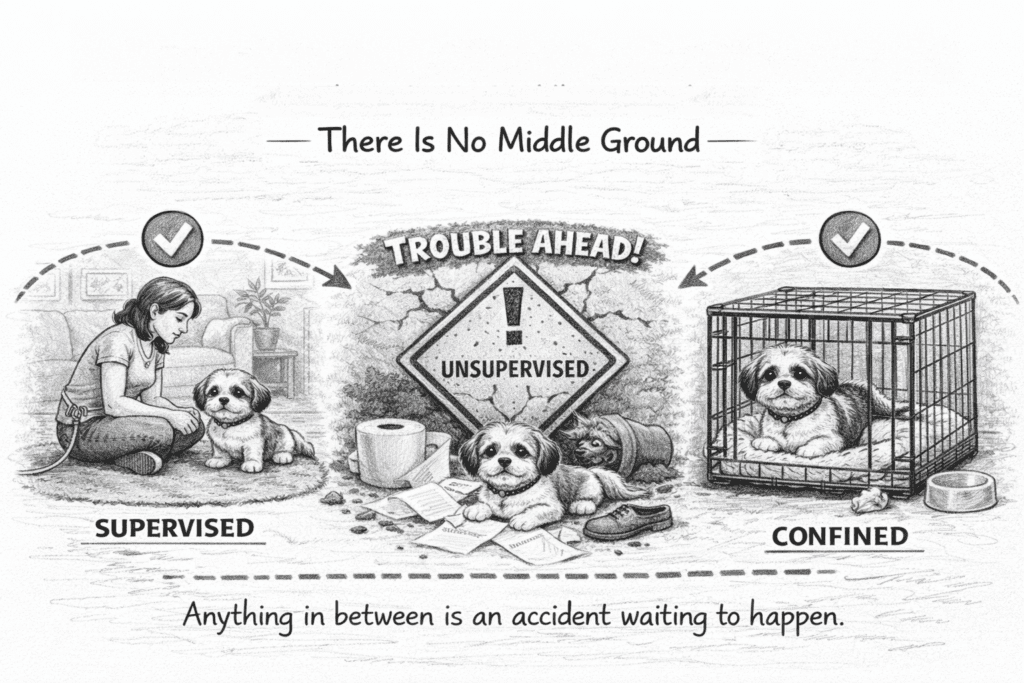
During training, your Shih Tzu has two modes: supervised or confined. Anything in between is an accident waiting to happen.
When you can watch them directly, keep them in the same room as you. If you need to cook, shower, or take a call, put them in their exercise pen or crate. This isn’t punishment — it’s structure that speeds up training.
A useful technique: the “tethering method,” where you clip the leash to your belt loop while you’re home. Your puppy stays within arm’s reach at all times, and you’ll catch early signs of needing to go before an accident occurs.
The Potty Schedule That Actually Works
The American Shih Tzu Club outlines specific windows when puppies almost always need to eliminate. Hitting every one of these triggers dramatically reduces accidents:
- Immediately upon waking — from nighttime sleep and from all naps
- 15–20 minutes after eating or drinking
- After a play session
- Before going into the crate or playpen
- After coming out of the crate or playpen
- Before bedtime
For young puppies, this may mean 8–12 outdoor trips per day. That’s not excessive — that’s what the breed requires. As your puppy’s bladder develops and they gain control, the frequency naturally decreases.
Pro Tip: Keep a small notepad on the kitchen counter for the first two weeks and log every successful outdoor elimination and every indoor accident with the time. Patterns emerge quickly — most puppies become predictable within a week, and you’ll be able to anticipate needs before they become emergencies.
Outdoor vs. Indoor Training: Which Is Better?
This depends on your living situation, but there’s a clear recommendation from experienced Shih Tzu trainers: outdoor training is generally easier and faster for most dogs and leads to fewer accidents long-term.
That said, indoor pad training is a legitimate and effective option for:
- High-rise apartment residents without easy yard access
- Owners in climates with extreme cold or heat
- Those with mobility limitations that make frequent outdoor trips difficult
The Hybrid Approach
Many owners successfully use both: outdoor training as the primary goal, with indoor pee pads as a secondary emergency option in a designated playpen area. This works well provided you maintain clarity — if the pads are an option, keep them in one specific, consistent location and don’t move them around.
Warning: Mixing methods without structure can backfire. If your Shih Tzu learns that both the pee pad and the carpet feel acceptable (similar soft textures), accidents on rugs become more likely. If you use pee pads, consider placing them in a hard-floored area or in a pen with a raised pad holder to create a texture distinction.
Transitioning from Pads to Outdoor
If you’ve started with pads and want to move to outdoor-only training, do it gradually. The Animal Humane Society recommends progressively removing pads one at a time every two days until only one remains, then moving that single pad toward the door, and eventually outside — allowing your dog to follow the scent cue in the direction you want.
How to Handle Accidents
Accidents are not failures. They’re data.
Every indoor accident tells you one of three things: your puppy was unsupervised too long, the schedule needed adjustment, or the environment sent the wrong signal. Shift your mindset from blame to troubleshooting.
What to Do Immediately After an Accident
- Don’t scold. If you didn’t catch them in the act, correction is useless — and counterproductive. Dogs cannot connect a scolding to something that happened even 30 seconds ago. Punishment after the fact teaches your dog to hide their accidents, not stop having them.
- If you catch them mid-accident, calmly interrupt with a neutral sound (not a shout), scoop them up, and take them directly to the outdoor spot. If they finish outside, reward enthusiastically.
- Clean the spot immediately and thoroughly. Use an enzymatic cleaner — not soap and water, not vinegar, not regular household cleaner. Urine enzymes that remain in flooring or carpet signal to your Shih Tzu that the spot is an acceptable bathroom location. Their nose detects residue humans cannot.
The Enzymatic Cleaner Non-Negotiable
Standard cleaning products don’t break down urine compounds at the molecular level. According to the American Shih Tzu Club, a Shih Tzu’s keen sense of smell can detect lingering odors even after thorough human cleaning, which signals the spot as an acceptable bathroom area and perpetuates the cycle of accidents.
Nature’s Miracle Original Stain & Odor Remover is one of the most widely recommended enzymatic cleaners in the dog training community, available at Petco, Chewy, Amazon, and most pet retailers.
Common Mistakes That Set You Back
These are the errors most commonly responsible for Shih Tzu potty training failures. Recognize any of them?
Giving Too Much Freedom Too Soon
This is the #1 cause of prolonged housetraining. Letting a puppy roam freely through the house before they’re reliably trained gives them unlimited opportunities for unsupervised accidents — and each accident reinforces the wrong behavior. Limit access. Earn freedom room by room, over weeks, not days.
Using Punishment After Accidents
Yelling, nose-rubbing, or physical correction after an indoor accident doesn’t teach your dog where to go — it teaches them to be afraid of you and to hide future accidents. The result is a dog who sneaks off to a corner of the bedroom rather than one who goes outside. Positive reinforcement isn’t just nicer; it’s faster and more effective.
Warning: Multiple training sources and behavioral experts confirm that punishment-based housetraining actively extends the process. If you’ve been using corrections, stop immediately and reset with positive reinforcement. Expect a reset period of 2–4 weeks before progress resumes.
Expecting Them to “Ask” Before You’ve Taught It
Your Shih Tzu can learn to signal when they need to go — but only after they’ve mastered the concept that outside is the bathroom. Don’t wait for your puppy to “tell you” in the early weeks. Your job is to take them out proactively so often that accidents rarely have a chance to happen. The signaling behavior develops naturally over time, once the outdoor habit is established.
Inconsistent Cleaning
Cleaning an accident with soap and water and calling it done leaves enzymatic residue that your dog can detect. Every uncleaned or under-cleaned spot is a passive invitation to repeat the accident at that location.
Multiple People Using Different Commands or Rules
If one family member says “potty,” another says “outside,” and a third lets the dog out without a leash, you’re working against yourself. Consistency across every human in the household is as important as consistency in the schedule itself.
Potty Training an Adult Shih Tzu
The process is the same. The steps don’t change based on age.
What may differ is the timeline: an adult Shih Tzu with ingrained habits — especially one who has been having indoor accidents for months or years — will need a longer reset period. Expect 2–3 months of consistent retraining rather than the standard 2–4 months for a puppy.
One important note: if an already-housetrained adult Shih Tzu suddenly begins having accidents, a medical issue may be responsible. Urinary tract infections, bladder infections, kidney disease, and cognitive decline in senior dogs can all cause housetraining regression. A veterinary examination should precede any behavioral retraining in these cases.
Pro Tip: Senior Shih Tzus (9+ years) may develop incontinence that has nothing to do with training. Talk to your vet about whether washable belly bands (for males) or lightweight dog diapers are appropriate — these can be dignified, practical solutions for aging dogs who’ve “lost” reliable training through no fault of their own.
Recommended Products
#1: Enzymatic Cleaner — Nature’s Miracle Advanced Stain and Odor Eliminator

Why it’s best for Shih Tzus: The single most important product in your training toolkit isn’t a treat or a pad — it’s an enzymatic cleaner. A Shih Tzu’s nose will find every under-cleaned accident spot and return to it. Nature’s Miracle uses a bacteria-based formula that produces enzymes on contact with biological messes, breaking them down at the molecular level rather than masking them.
- Why it’s best: Works on carpets, hardwood, furniture, and fabric; widely recommended by veterinarians and dog trainers
- Key features: Enzymatic formula, light citrus scent, safe for use around pets and children when dry
- Best for: Cleaning up every indoor accident during training
- Where to buy: Amazon | Chewy | Petco | Most grocery stores
#2: Indoor Exercise Pen — Amazon Basics Foldable Octagonal Metal Exercise Puppy / Dog Playpen

Why it’s best for Shih Tzus: Crates alone are often too confining for long stretches and can cause stress in puppies prone to separation anxiety (a known Shih Tzu trait). A playpen gives your puppy a safe, defined area with room for a bed, water, pee pads, and toys — without the anxiety of a crate.
- Key features: Available in multiple heights, easy to configure, expandable with additional panels
- Best for: Containing your Shih Tzu safely when you can’t directly supervise
- Pro tip: Place pee pads in one corner and bedding in the opposite corner — dogs naturally avoid eliminating where they sleep
- Where to buy: Amazon | Chewy | Petco
#3: High-Value Training Treats — Zuke’s Mini Naturals Tender Bites

Why it’s best for Shih Tzus: Training treats need to be small (eaten in one second), soft (no chewing delay), and genuinely exciting. Wellness Soft WellBites and Zuke’s Mini Naturals are both widely used for Shih Tzu training — small enough to use frequently without overfeeding, and flavorful enough to motivate even a stubborn personality.
- Key features: Soft texture, small size, available in multiple protein flavors
- Best for: Instant reward within seconds of successful outdoor elimination
- Storage tip: Keep a zip bag of these near your exit door for immediate access
- Where to buy: Amazon | Chewy | PetSmart
FAQs
How long does it take to potty train a Shih Tzu?
With consistent daily effort, most Shih Tzus can be reliably housetrained in 2 to 4 months. Individual timelines vary based on how consistently the training is applied, the dog’s personality, and how often accidents are allowed to happen unsupervised. Puppies who have been having accidents for months before retraining begins may take longer.
Are Shih Tzus easy to potty train?
No — they’re widely considered one of the more challenging small breeds to housebreak. Their stubborn, independent nature and small bladder capacity require more owner effort and patience than many breeds. That said, every healthy Shih Tzu is fully capable of becoming reliably housetrained.
What age should I start potty training my Shih Tzu puppy?
Start the day they come home, which is typically 8 weeks old. While their bladder control is limited at this age, beginning the routine and schedule immediately establishes good habits early. Confirm with your vet when it’s safe to bring them to public outdoor areas, given their vaccination status.
Why does my Shih Tzu pee inside right after coming in from outside?
This is one of the most frustrating experiences for Shih Tzu owners. The most common cause is distraction outdoors — they spent their time sniffing and exploring rather than eliminating, then came inside and relaxed enough to finally go. Keep outdoor potty trips leashed and focused on the designated spot. Don’t let them play until after they’ve gone.
My Shih Tzu knows they’re supposed to go outside but still has accidents. Why?
Understanding a rule and reliably following it are different things for puppies — just as with children. Their bladder control is still developing, and excitement, distraction, or simply waiting too long between trips all override their intentions. Keep the schedule tight, reduce freedom in the house, and give it more time.
Should I use pee pads or train outdoors?
Outdoor training is generally faster and leads to fewer long-term accidents. Pee pads are a practical solution for apartment dwellers, owners with limited outdoor access, or during extreme weather. If you use both, maintain strict consistency about where the pads are located.
What should I do when my Shih Tzu has an accident inside?
If you catch them in the act, calmly interrupt and take them to the outdoor spot immediately. Reward if they finish outside. If you discover an accident after the fact, clean it thoroughly with an enzymatic cleaner and don’t scold — they cannot connect the correction to the earlier behavior. Focus on tightening your supervision going forward.
Why does my Shih Tzu keep going back to the same spot to have accidents?
Urine and fecal enzymes aren’t fully removed by soap and water. Your Shih Tzu’s nose detects the remaining trace, which signals the spot as an acceptable bathroom location. Clean all accident sites thoroughly with a quality enzymatic cleaner.
Can I potty train an older Shih Tzu?
Yes. The steps are identical for adult dogs. Allow 2–3 months of consistent retraining. If an already-trained adult dog suddenly begins having accidents, consult your veterinarian first to rule out a medical cause such as a UTI, bladder infection, or cognitive decline.
How do I stop my Shih Tzu from peeing when excited?
Excitement urination is common in puppies and some adult dogs, particularly when greeting people. Keep greetings calm and low-key, avoid direct eye contact and bending over the dog upon arrival, and move quickly to the outdoor spot as part of your greeting routine. Most puppies outgrow this as their bladder control develops with age.