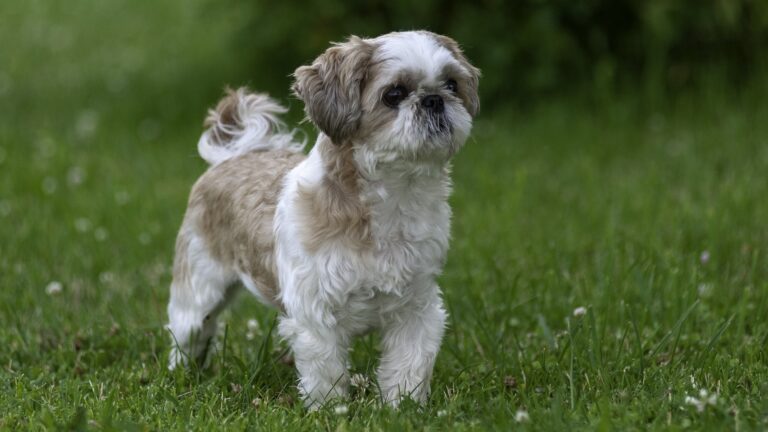

Shih Tzu Umbilical Hernia: Signs, Risks, and Treatment
Disclosure: This article contains an affiliate link. As an Amazon Associate, Shih Tzu Pedia earns from qualifying purchases, at no extra cost to you.
How we researched this guide: This article is based on veterinary guidance from VCA Animal Hospitals and Animal Trust, a UK not-for-profit veterinary practice. It is not a substitute for an exam. Last reviewed: September 2026.
Have you noticed a soft bump on your Shih Tzu puppy’s belly? It may be an umbilical hernia. These are common in puppies, and most are small and harmless. Some close on their own. Others need a simple repair, often done at the same time as spaying or neutering.
This guide explains what an umbilical hernia is, which signs mean an emergency, and what treatment usually involves.
What Is an Umbilical Hernia?
Before birth, blood vessels pass through an opening in the belly wall called the umbilical ring. It normally closes soon after birth. If it does not close fully, fat or other tissue can push through the gap. That creates a soft bulge under the skin at the belly button, on the underside just below the rib cage.
VCA Animal Hospitals notes that hernias range from less than a quarter inch to more than an inch across.
What Causes It?
VCA reports that certain family lines have more umbilical hernias, which suggests the condition is at least partly genetic. Animal Trust advises that dogs with an umbilical hernia should not be used for breeding because the condition is known to be hereditary. If you are buying a puppy, ask the breeder whether the parents or earlier litters had hernias. Our Shih Tzu breeding guide covers health checks for breeding dogs.

Types of Umbilical Hernia
| Type | What it means | Risk |
|---|---|---|
| Reducible | The bulge can be gently pushed back into the belly | Usually low. Your vet will monitor it. |
| Non-reducible | Tissue is stuck in the opening and cannot be pushed back | Higher. Needs a vet check soon. |
| Strangulated | Trapped tissue loses its blood supply | Rare, but an emergency that needs surgery |
Go to the vet right away if the bulge: becomes hard, painful, warm, larger, or discolored, or if your puppy is vomiting, not eating, or unusually tired. Animal Trust lists pain, warmth, loss of appetite, vomiting, and lethargy as signs of a problem with a non-reducible hernia. VCA notes that in rare cases, trapped intestine can become strangulated and needs emergency surgery. Do not try to push the bulge back yourself.
Will It Close on Its Own?
Sometimes. VCA says small hernias, less than about a quarter inch (1 cm), may close without treatment by 3 to 4 months of age. Animal Trust notes that some may take until around 6 months. Your vet will check the size at each puppy visit.
Treatment and Surgery
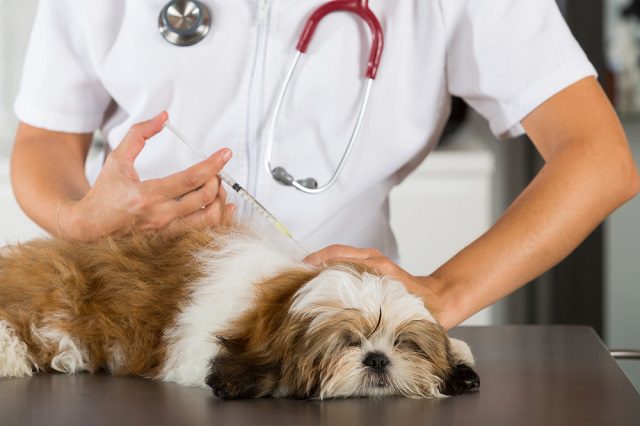
If the hernia has not closed by the time your puppy is spayed or neutered, VCA recommends repairing it during the same anesthesia. The vet removes scar tissue and closes the opening with stitches. Larger or non-reducible hernias may need repair sooner. Read our guide to spaying and neutering a Shih Tzu for timing advice.
The outlook is excellent. VCA reports that few puppies have the hernia come back, and few complications are reported after repair.

Caring for Your Shih Tzu After Hernia Repair
- Follow your vet’s instructions on pain relief and activity.
- Keep your dog from licking or chewing the incision. A recovery suit, such as the Suitical Recovery Suit, or a soft cone can help.
- Check the incision daily for redness, swelling, or discharge, and call your vet if you see any.
- Limit jumping, stairs, and rough play until your vet says it is safe.
- Attend the recheck appointment so your vet can confirm healing.
For more on raising a healthy puppy, see our Shih Tzu puppy care guide.

Frequently Asked Questions
Is an umbilical hernia dangerous for a Shih Tzu?
Most are small and harmless. In rare cases, tissue can become trapped and lose its blood supply, which is an emergency. See your vet right away if the bulge becomes hard, painful, warm, or larger, or if your dog vomits or stops eating.
Can a Shih Tzu umbilical hernia go away on its own?
Small hernias, less than about a quarter inch, may close by 3 to 4 months of age, according to VCA Animal Hospitals. Some may take until around 6 months. Larger hernias usually need surgical repair.
When should an umbilical hernia be repaired?
VCA recommends repairing a hernia that has not closed at the time of spaying or neutering. Larger or non-reducible hernias may need repair sooner. Your vet will advise on timing.
Is an umbilical hernia genetic?
VCA notes that some family lines have more hernias, which suggests a partly genetic cause. Animal Trust advises that affected dogs should not be bred.
What is the recovery like after hernia surgery?
The outlook is excellent. Keep your dog from licking the incision, limit activity as your vet advises, and watch for redness, swelling, or discharge.
Sources
This article is for general information. It is not a substitute for advice from your veterinarian. Read our medical disclaimer.