Lhasa Apso vs Shih Tzu: Size, Face, Temperament and Care Compared
Part of our guide: Shih Tzu mix breeds
Quick answer: Lhasa Apso vs Shih Tzu: the Lhasa Apso is slightly bigger (10 to 11 inches, 12 to 18 pounds), has a longer muzzle and a hard, straight coat, and is wary of strangers, because it was bred as a Tibetan monastery watchdog. The Shih Tzu is a little smaller, has a short face and a softer, flowing coat, and was bred purely as a friendly companion.
On this page
How we researched this article: This guide is based on the American Kennel Club (AKC) breed standards for both breeds, the AKC’s own comparison of the two, the VCA Animal Hospitals breed profiles, and the AKC and American Shih Tzu Club breed leaflet. Every source is listed at the end. Last reviewed: November 2026.
The Lhasa Apso and the Shih Tzu look so alike in full coat that even dog lovers mix them up. They share Tibetan roots, long double coats and a small, sturdy build. But they were bred for different jobs. The Lhasa was a watchdog in Tibetan monasteries. The Shih Tzu was a palace companion in China. That history still shows in their faces, their coats and the way they greet strangers.
Lhasa Apso vs Shih Tzu at a Glance
| Lhasa Apso | Shih Tzu | |
|---|---|---|
| Height | 10 to 11 inches | 8 to 11 inches (ideally 9 to 10½) |
| Weight | 12 to 18 pounds | 9 to 16 pounds |
| Life span (AKC) | 12 to 15 years | 10 to 18 years |
| AKC group | Non-Sporting | Toy |
| Original job | Monastery sentinel in Tibet | Companion at the Chinese court |
| Muzzle | Longer: about one third of the head | Short and square |
| Eyes | Dark brown, almond-shaped | Large, round, very dark |
| Coat | Heavy, straight, hard; not silky | Luxurious, long and flowing; slight wave allowed |
| With strangers | Often aloof | Outgoing and trusting |
| Colors | All colors accepted | All colors accepted |
Sources: AKC, Lhasa Apso vs. Shih Tzu; AKC breed standards for the Lhasa Apso and Shih Tzu.
Two Breeds, Two Jobs
The Lhasa Apso comes from Tibet and is named after its capital, Lhasa. The AKC says Lhasas were kept in Tibetan temples, where they alerted people to intruders. VCA describes them as monastery lookouts that sounded the alarm when visitors arrived, and notes that DNA studies place the Lhasa among the oldest breeds the AKC recognizes.
The Shih Tzu came later. According to the AKC, it is thought to descend from Tibetan dogs like the Lhasa that were brought to the Chinese court in the 16th and 17th centuries and later crossed with Pekingese. The two breeds were close enough that early Shih Tzus arriving in the US in the 1940s were registered as Lhasa Apsos. Read more in our Shih Tzu history.
How to Tell Them Apart
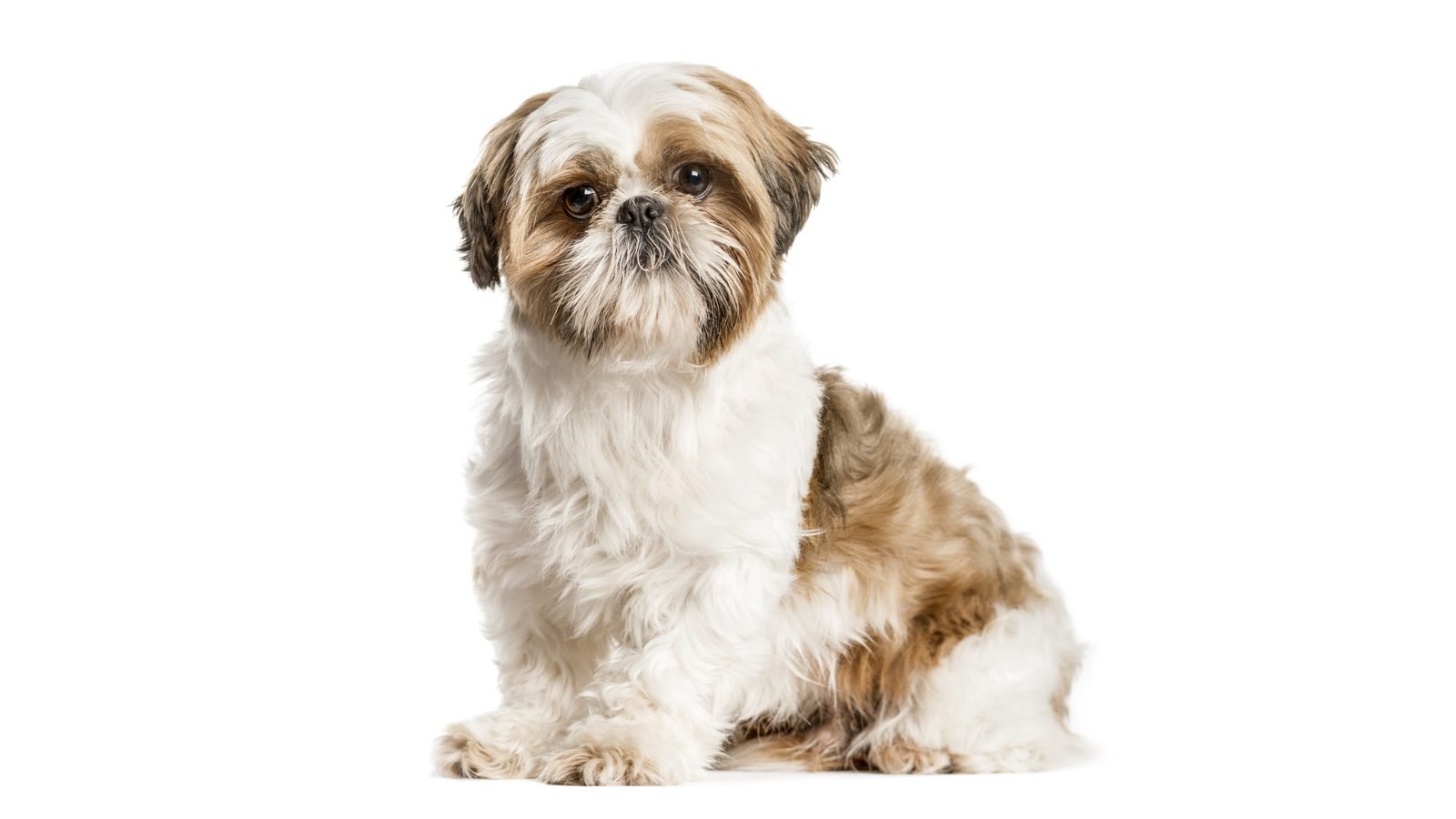
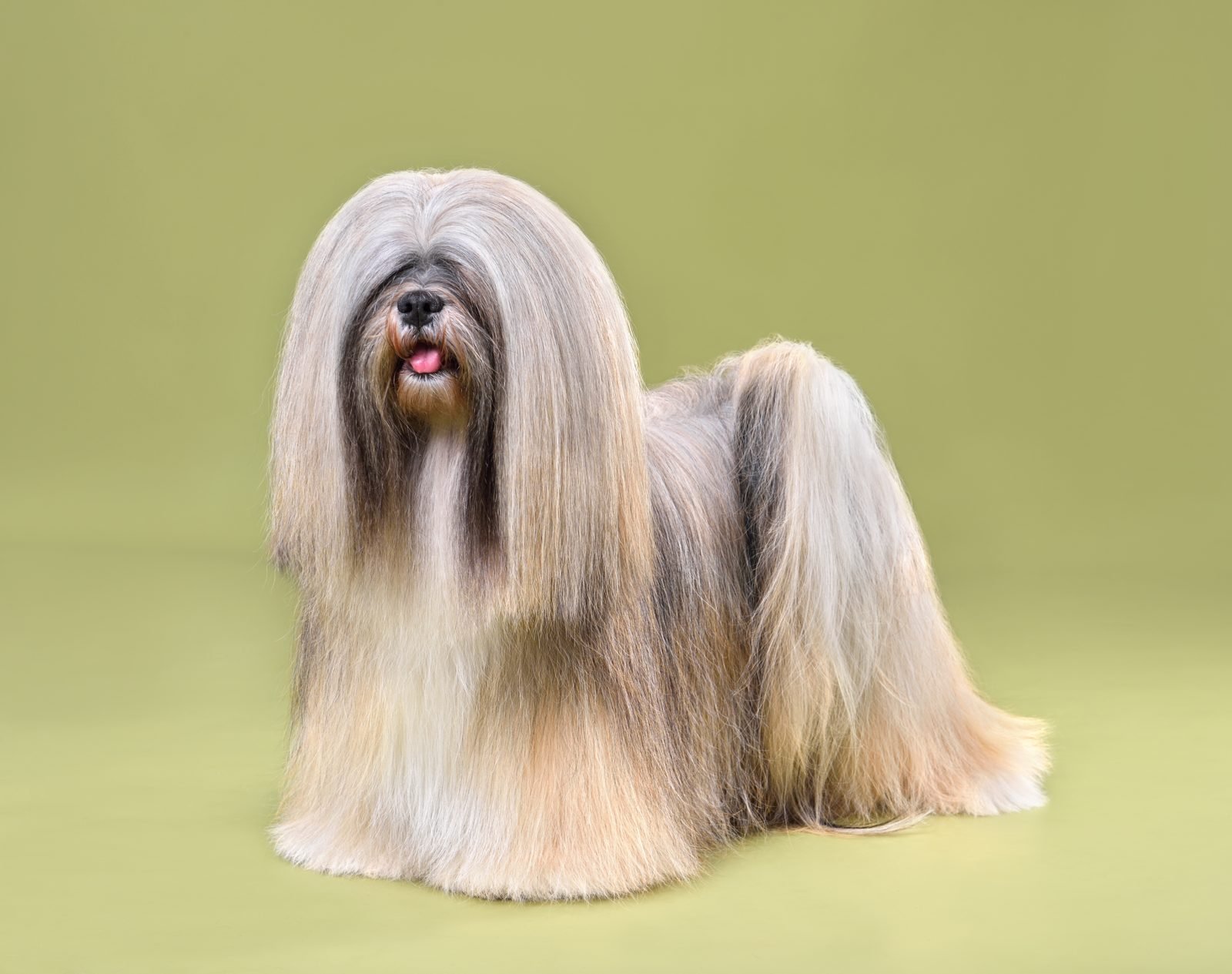
Look at the face first. This is the clearest difference. The Lhasa Apso standard calls for a straight foreface of fair length, with the nose-to-eye distance about one third of the head’s total length. The Shih Tzu standard calls for a short, square muzzle set no lower than the bottom of the eye rim. In practice, a Lhasa has a noticeable nose and a Shih Tzu has a flat, round face.
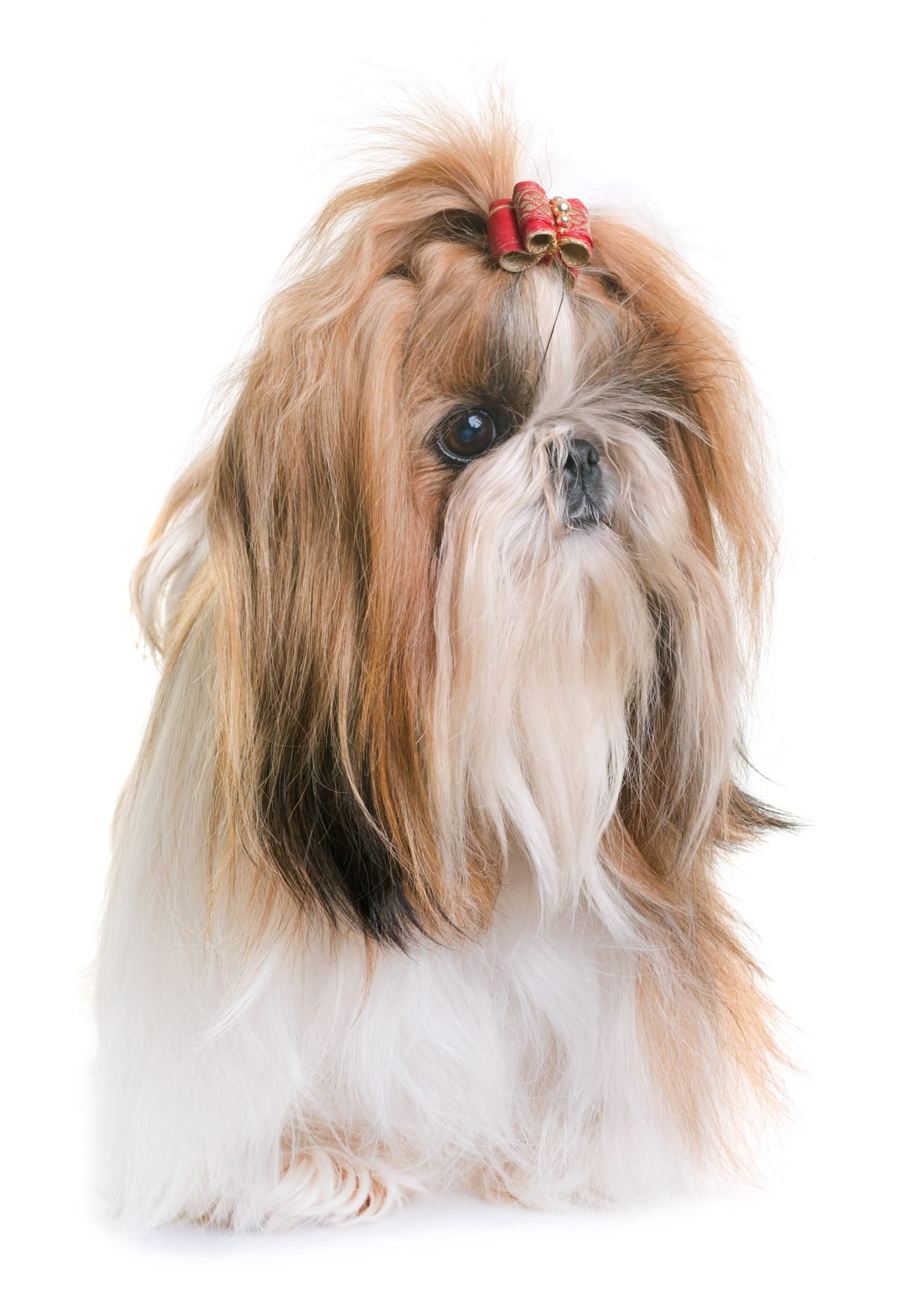
Then the eyes. Lhasa eyes are dark brown and almond-shaped. Shih Tzu eyes are large, round and very dark.
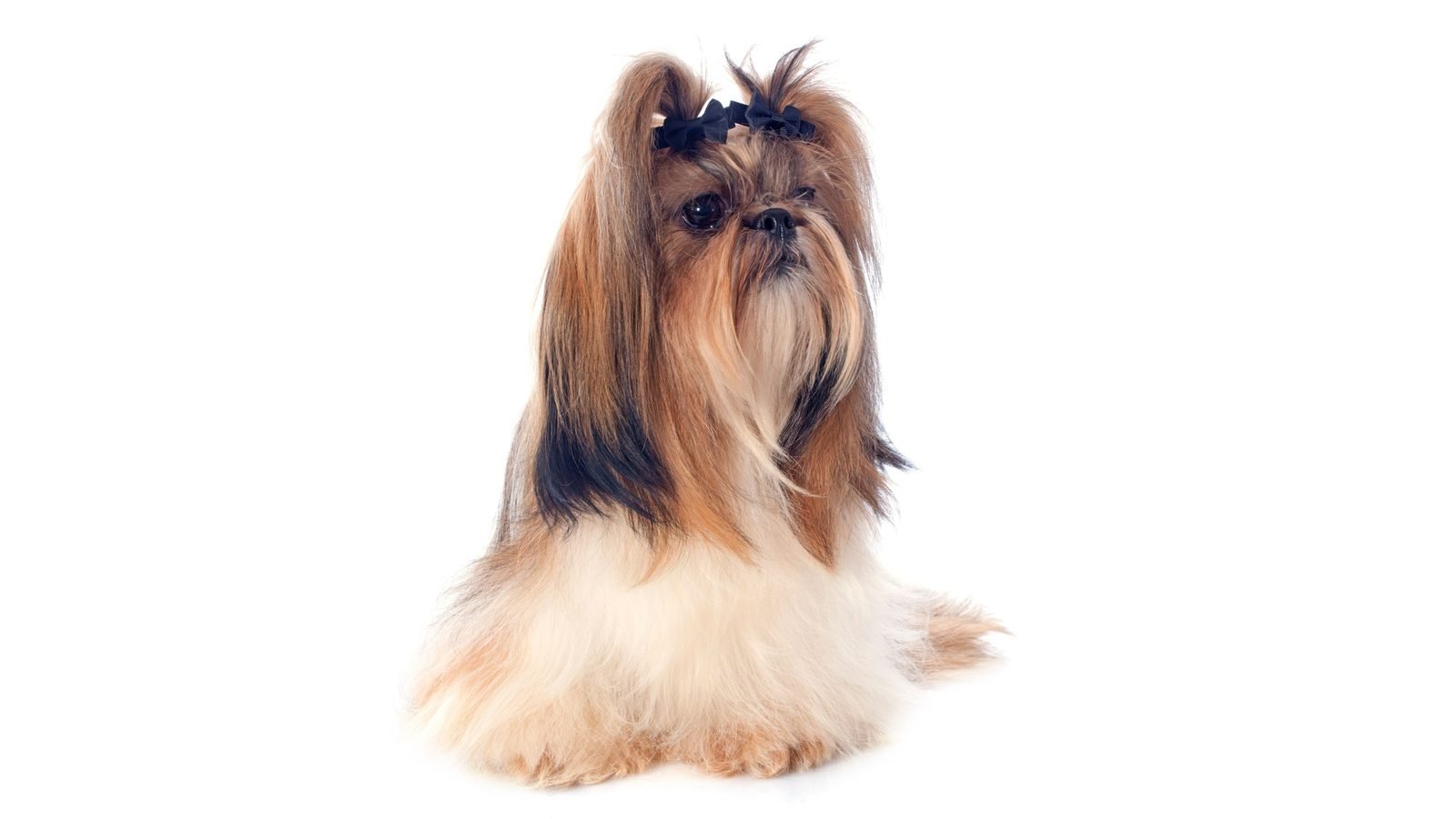
Then the coat. The Lhasa coat is heavy, straight and hard, and the standard says it should not be woolly or silky. The Shih Tzu coat is long, dense and flowing, with a slight wave allowed. Both are double coats, and both breeds come in every color.
Size helps less. The Lhasa is a little taller and heavier on average, but the ranges overlap, so you cannot tell two dogs apart by size alone.
Temperament: Watchdog vs Lap Dog
The Lhasa Apso is described in its breed standard as extremely intelligent, charming and loyal, and possibly aloof with strangers. VCA calls the breed bold, stubborn and independent, says it is often aloof toward strangers, and recommends early socialization. Some Lhasas bark a lot. VCA also says they are playful and good with children, and generally friendly toward other dogs and pets.
The Shih Tzu was bred only to be a companion. The AKC standard says its temperament must be outgoing, happy, affectionate, friendly and trusting towards all. VCA notes it is outgoing toward strangers and good with other dogs and pets, with a stubborn streak in training. See our guide to Shih Tzu temperament.
In short, a Lhasa makes a better little watchdog. A Shih Tzu is more likely to greet a visitor as a new friend.
Grooming and Care
Both breeds have long double coats that mat without regular care. The AKC comparison says a Lhasa coat needs brushing at least weekly, while a long-coated Shih Tzu needs daily brushing plus eye cleaning. VCA advises brushing and combing every other day for both breeds. Either breed can be kept in a short puppy cut to make life easier; see our Shih Tzu haircuts guide.
Exercise needs are modest for both. The AKC says both do well with walks of about 15 to 20 minutes, though the Lhasa usually needs a little more activity. Neither breed enjoys hot weather, and VCA advises supervising both near water.
Health Differences
Both breeds are generally long-lived small dogs. The AKC comparison highlights different concerns for each:
- Shih Tzu: the short face and long coat make heat and swimming harder, and the large eyes are prone to injury. See our guide to Shih Tzu health problems.
- Lhasa Apso: the main concern the AKC names is hereditary kidney disease, which ranges from mild to severe. There is no reliable test to find carriers, so choosing a careful breeder matters.
Shih Tzu and Lhasa Apso Mix
A Shih Tzu and Lhasa Apso mix is a cross between the two breeds. It is not a recognized breed, so there is no standard for its size or look. Because the parents are so similar, most of these mixes are small, long-coated dogs somewhere between 9 and 18 pounds, with a face that may be short like a Shih Tzu’s or longer like a Lhasa’s. Expect the grooming needs of both parents and the possible health problems of either side. See our guide to popular Shih Tzu mixes.
Which Breed Is Right for You?
| Choose a Lhasa Apso if you want… | Choose a Shih Tzu if you want… |
|---|---|
| A small, alert watchdog | A friendly dog that welcomes visitors |
| An independent dog that is loyal to its family | A people-focused lap dog |
| A coat that is a little lower-maintenance | The classic round-faced “lion dog” look |
| A dog with a slightly longer nose | A smaller dog (9 to 16 pounds) |
Whichever you choose, look for a breeder who health-tests the parents and lets you meet them, or check breed rescues. If you are leaning toward the Shih Tzu, our Shih Tzu pros and cons guide is a good next step. Also weighing up another white, long-coated breed? Compare the Maltese dog vs Shih Tzu. For more look-alikes, see our guide to dogs similar to Shih Tzu.
Frequently asked questions
Which is bigger, a Lhasa Apso or a Shih Tzu?
The Lhasa Apso. The AKC puts the Lhasa at 10 to 11 inches and 12 to 18 pounds, and the Shih Tzu at 8 to 11 inches and 9 to 16 pounds.
How can I tell a Lhasa Apso from a Shih Tzu?
Look at the face. The Lhasa has a longer muzzle, about one third of the head's length, and almond-shaped eyes. The Shih Tzu has a short, square muzzle and large, round eyes.
Which is friendlier, the Lhasa Apso or the Shih Tzu?
The Shih Tzu is usually more outgoing with strangers. The Lhasa Apso was bred as a monastery sentinel and tends to be aloof with people it does not know, though it is loyal to its family.
Is a Shih Tzu a type of Lhasa Apso?
No, they are separate breeds. But the Shih Tzu probably descends from Tibetan dogs like the Lhasa, and early Shih Tzus in the US were registered as Lhasa Apsos in the 1940s.
Which breed lives longer?
They are similar. The AKC lists 12 to 15 years for the Lhasa Apso and 10 to 18 years for the Shih Tzu. VCA lists 12 to 14 years for the Lhasa and 11 to 14 for the Shih Tzu.
Sources
- American Kennel Club. Gibeault S. Lhasa Apso vs. Shih Tzu: Similarities and Differences. Updated 2025.
- American Kennel Club. Official Standard of the Lhasa Apso.
- American Kennel Club. Official Standard of the Shih Tzu.
- VCA Animal Hospitals. Lhasa Apso and Shih Tzu breed profiles.
- American Kennel Club and American Shih Tzu Club. About the Shih Tzu (breed leaflet).
This article is for general information. It is not a substitute for advice from your veterinarian. Read our medical disclaimer.